

Lindos Travel Guide: Tourist Places & Activities
This ancient village on Rhodes Island is known for its clifftop acropolis, featuring ruins from the 4th century BC. Its narrow streets and beautiful beaches make it a popular tourist destination.
- Est. Visit Days
- 2 days
Overview
Lindos, a town on the Greek island of Rhodes, is renowned for its ancient Acropolis, which offers panoramic views and a glimpse into the area's historical significance. The town itself is a charming mix of whitewashed buildings and narrow streets, embodying a traditional Greek aesthetic. Visitors can enjoy the beautiful beaches and clear waters, perfect for relaxation and water activities. However, Lindos can get quite crowded during the peak tourist season, which might detract from the experience. Additionally, the town's popularity can lead to higher prices compared to less touristy destinations on the island.
Traffic & Transport
The primary mode of transport for navigating the city is by foot, as the narrow, winding streets are not conducive to vehicle traffic. For longer distances or to reach nearby attractions, visitors can use local buses, which are a cost-effective and efficient option. Renting a scooter or a bicycle is also a popular choice, offering flexibility to explore at one's own pace. However, it's important to note that parking can be limited in the central areas, especially during peak tourist seasons. For those preferring taxi services, there are several reliable taxi companies operating in the area. Additionally, the use of taxi-booking apps like Uber provides a convenient option for securing rides, with availability typically good throughout the city.
History
Historically, the city was a significant maritime and mercantile center, flourishing due to its location and the acropolis that dominated the landscape. It was a key city in the ancient world, known for its involvement in the slave trade and its production of fine ceramics. The city changed hands several times, being controlled by the Greeks, Romans, and Byzantines, each leaving their mark on its culture and architecture. It was also a notable city during the Crusades, with the Knights of St. John establishing a stronghold there in the 14th century. This diverse historical background is reflected in the city's architecture, which combines Hellenistic, Roman, and medieval influences.
Itinerary Sample
Explore the highlights of Lindos, Greece over two days with this structured itinerary:
– First day: Visit the Acropolis of Lindos early to avoid crowds. Explore its ancient ruins and enjoy panoramic views. Later, stroll through Lindos village and shop in local boutiques.
– Second day: Spend your morning at St. Paul's Bay, swimming or sunbathing. In the afternoon, visit the Church of the Panagia and explore its refined frescoes and architecture.
Near Excursion
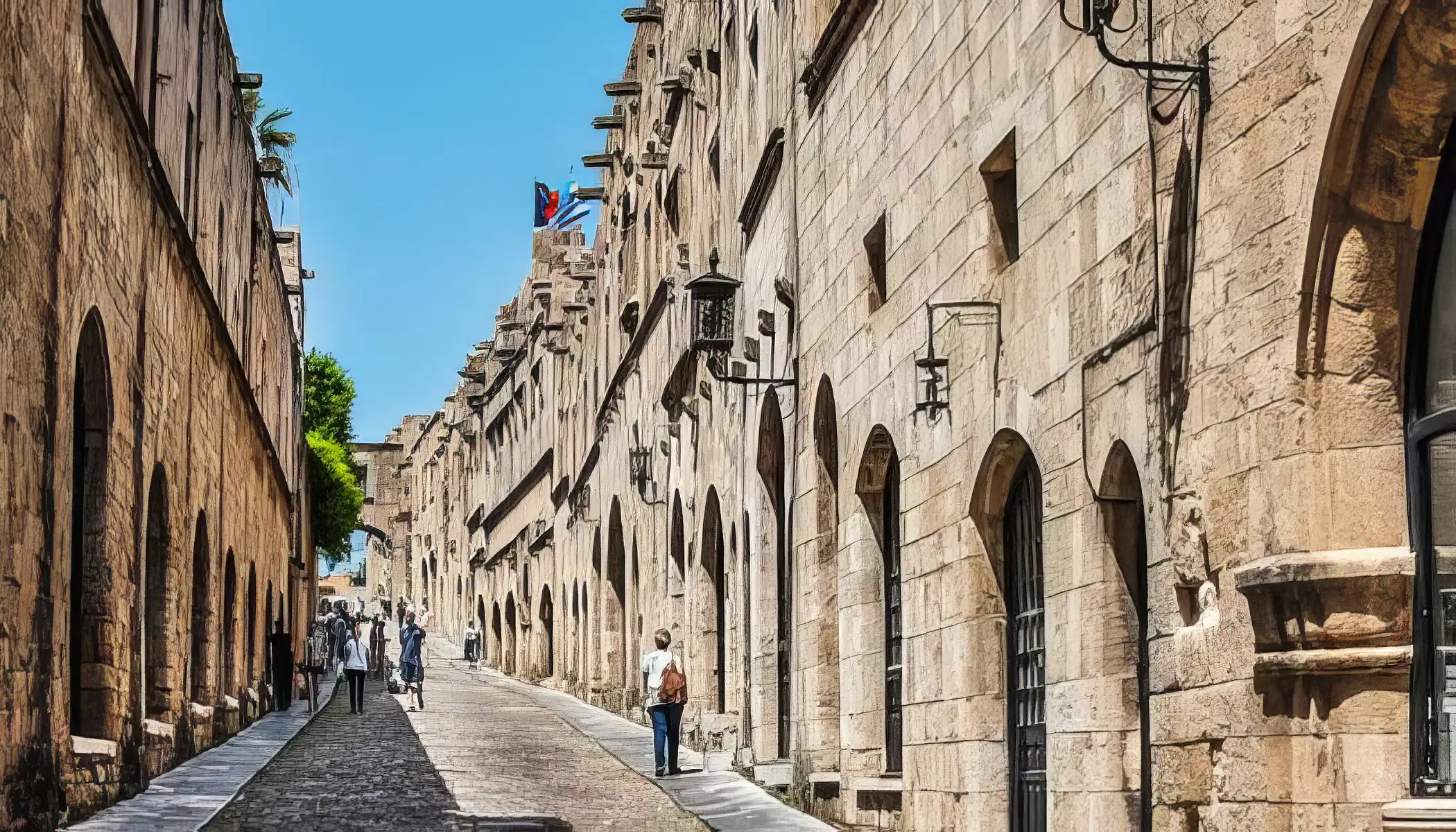
This city is a great starting point for several exciting day trips. Here are some suggestions:
– Rhodes Town at 50 km: Explore the medieval Old Town, a UNESCO World Heritage site.
– Butterfly Valley at 70 km: A dense valley filled with butterflies during the summer months.
– Seven Springs at 40 km: A natural oasis with walking trails and a small lake.
– Kamiros at 60 km: Visit the ruins of an ancient city with impressive archaeological remains.
– Prasonisi at 90 km: A unique spot where the Aegean and Mediterranean seas meet, popular for windsurfing.
Attraction
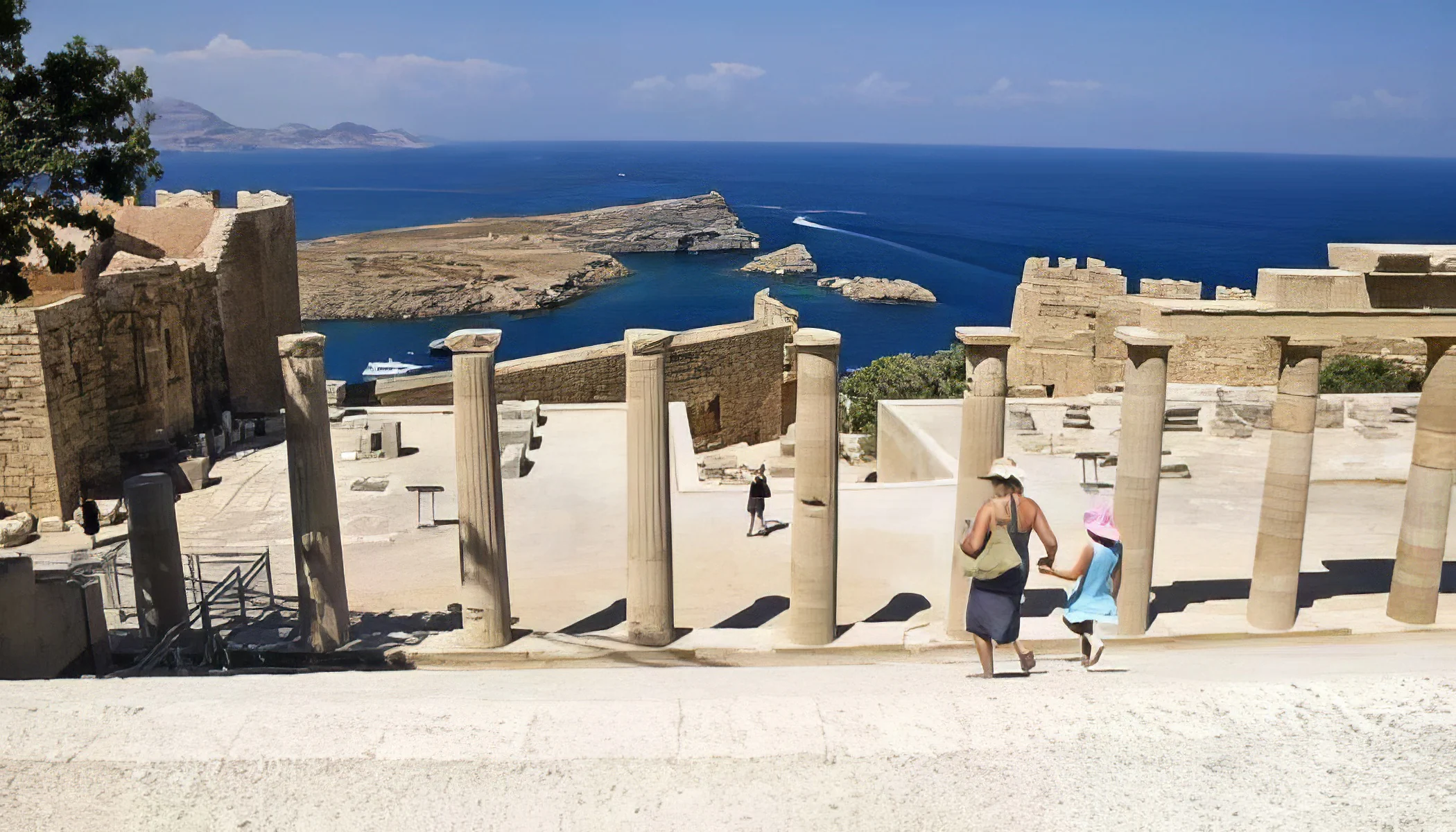
This city is known for its ancient ruins, beautiful beaches, and charming whitewashed buildings.
– Acropolis of Lindos: Ancient citadel offering remarkable views and historical ruins.
– St. Paul's Bay: Scenic bay perfect for swimming and snorkeling.
– Lindos Beach: Popular sandy beach with clear waters and sunbeds.
– Church of Panagia: Small, historic church with beautiful frescoes.
– Tomb of Kleoboulos: Ancient tomb with panoramic views of the coastline.
– Village of Lindos: Quaint village with narrow streets, shops, and traditional houses.
Activity
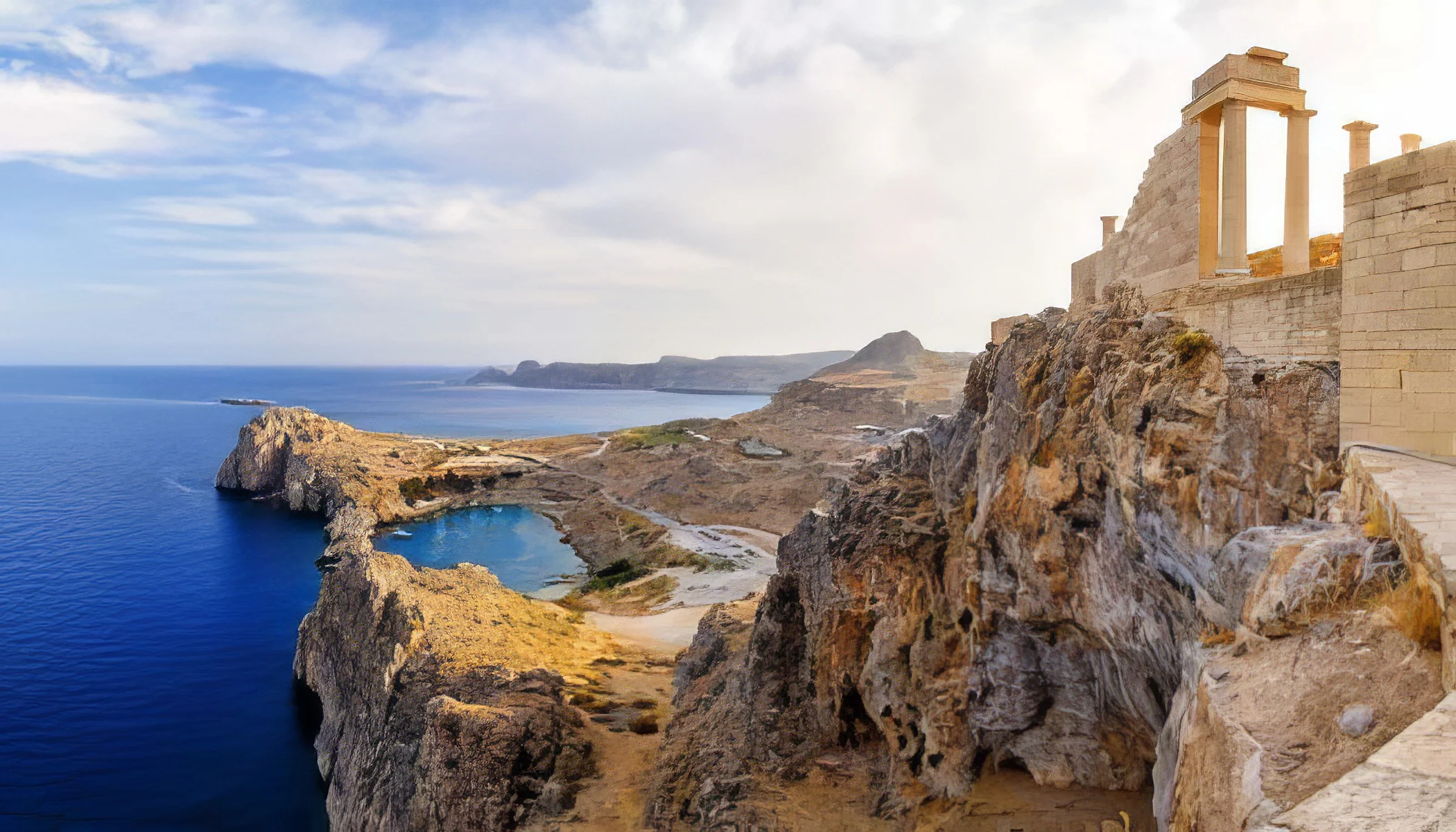
In Lindos, travelers can explore ancient ruins, enjoy scenic views, and experience traditional Greek culture.
– Acropolis of Lindos: Visit the ancient hilltop citadel with panoramic views.
– Lindos Beach: Relax on the sandy beach with crystal-clear waters.
– Donkey rides: Take a traditional donkey ride up to the Acropolis.
– Traditional Greek cooking class: Learn to cook local dishes with a professional chef.
– Boat tours: Explore nearby bays and caves on a guided boat tour.
Cuisine

The city offers a delightful mix of traditional Greek cuisine, with fresh seafood and local ingredients playing a central role. Some of the city's most famous dishes include:
– Moussaka: A baked dish with layers of eggplant, minced meat, and béchamel sauce.
– Souvlaki: Skewered and grilled meat, often served with pita bread and tzatziki.
– Dolmades: Grape leaves stuffed with rice, herbs, and sometimes meat.
– Greek Salad: Fresh tomatoes, cucumbers, olives, and feta cheese, dressed with olive oil.
– Baklava: A sweet pastry made of layers of filo dough, nuts, and honey syrup.
– Loukoumades: Fried dough balls drizzled with honey and sprinkled with cinnamon.
Shopping
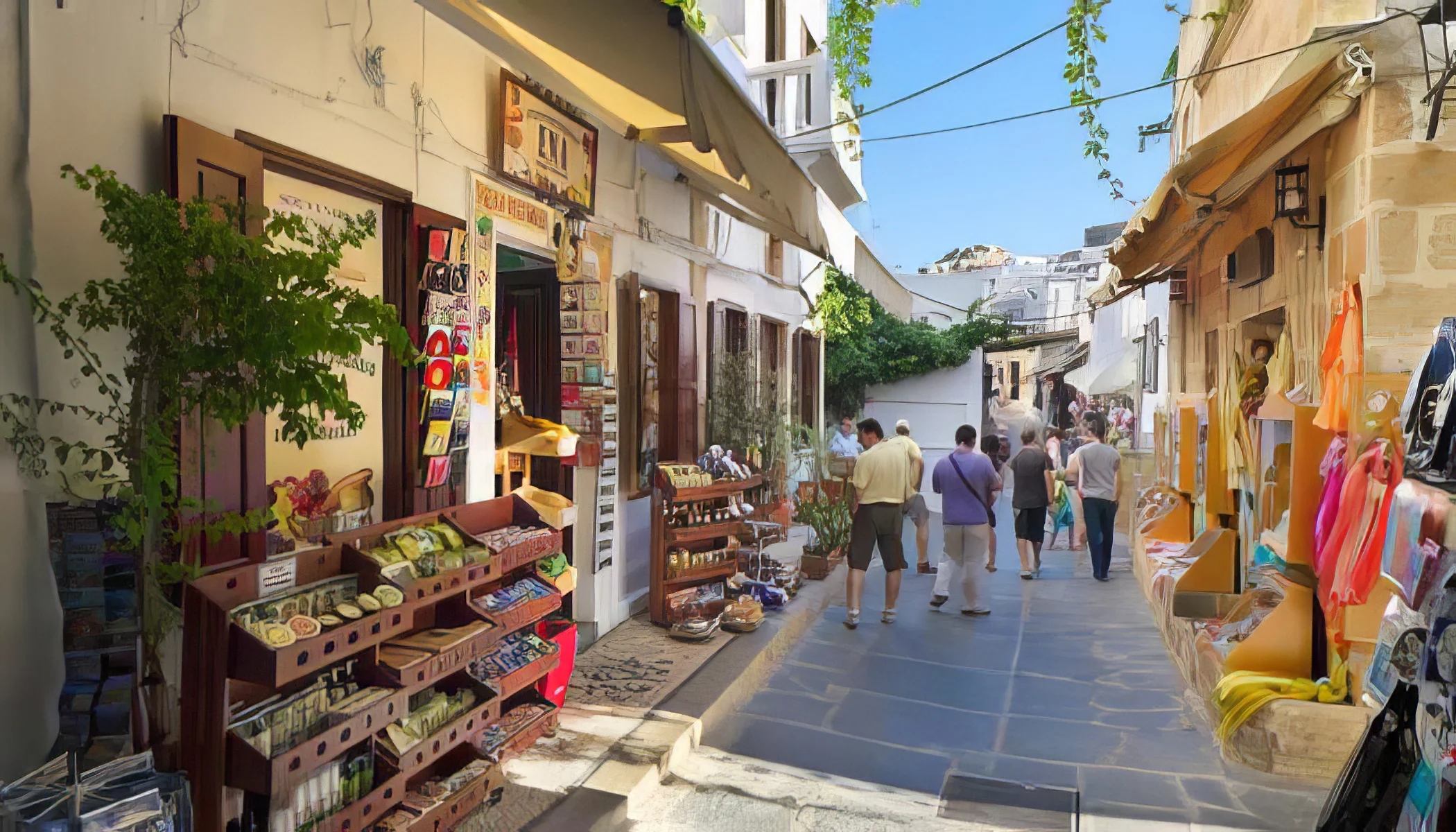
In the city you mentioned, tourists can enjoy browsing through small, charming shops that offer a variety of local crafts and products. Popular gifts to purchase include handmade jewelry, local olive oil, and traditional Greek ceramics. The narrow streets are lined with boutiques selling leather goods and custom sandals, which are also great souvenirs. Another unique gift idea is a piece of the famous Rhodes honey or some local spices. The shopping experience is enhanced by the scenic views and the historical ambiance of the area.
Arts & Culture

The city hosts the annual Lindos Festival, featuring live music and theatrical performances in its ancient amphitheater. The architecture reflects a blend of classical Greek, medieval, and Ottoman influences, notably in the preserved mansions and the acropolis. Art enthusiasts can explore numerous small galleries showcasing local artists. Traditional Greek crafts, such as ceramics and textile arts, are also prominent in local shops.