

Sightseeing in Pamukkale: Culture & Must‑See Spots
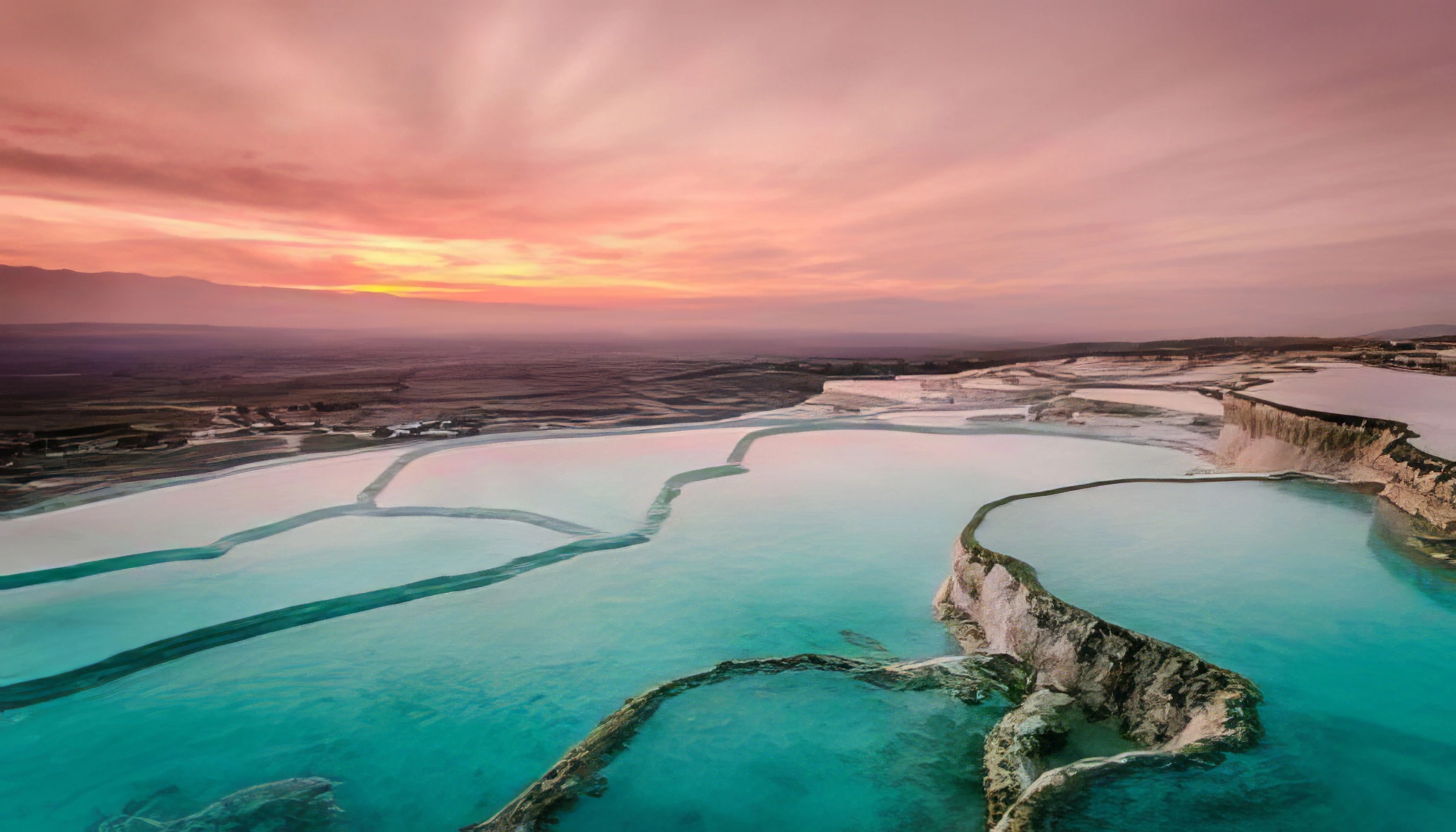
This natural site is famous for its white terraces formed by mineral-rich thermal waters. It's a UNESCO World Heritage site, also known for the ancient ruins of Hierapolis located nearby.
- Airport
- Denizli Çardak at 65 km – Int'l.
- Train Station
- Denizli Station at 20 km
- Est. Visit Days
- 2 days
Overview
Pamukkale, located in southwestern Turkey, is renowned for its mineral-rich thermal waters and striking white travertine terraces. The city is home to the ancient Greco-Roman and Byzantine city of Hierapolis, adding a historical dimension to its natural beauty. Visitors can enjoy the therapeutic hot springs and explore the well-preserved ruins in a unique juxtaposition of nature and history. However, Pamukkale's popularity can lead to overcrowding, especially during peak tourist seasons, which might detract from the experience. Additionally, the terraces are sensitive to environmental factors and human impact, necessitating conservation efforts to preserve this natural wonder.
Traffic & Transport
The city experiences moderate traffic, with peak congestion during the summer months when tourist arrivals are highest. The best means to explore the area is by using local buses, which are affordable and cover most major attractions. Additionally, renting a car can provide flexibility, especially for visiting sites outside the city center. For a more scenic experience, bicycles are available for rent at various locations. For those preferring taxi services, there are several reliable taxi companies operating in the area. Additionally, the use of taxi-booking apps like BiTaksi offers a convenient option for securing a ride, with the added benefit of transparent pricing and ease of payment through the app.
History
Historically, the city was known as Hierapolis, founded in the 2nd century BC by the King of Pergamon. It thrived as a healing center due to its mineral-rich thermal waters. The city changed hands between various empires, including the Roman, Byzantine, and Ottoman, which influenced its architecture and culture. It was significantly impacted by earthquakes in the 7th and 12th centuries, leading to rebuilding and demographic shifts. The site's historical ruins and thermal pools continue to attract visitors worldwide.
Itinerary Sample
Explore the highlights of Pamukkale, Turkey over two days with this itinerary:
– First day: Visit the natural thermal pools of Pamukkale, then explore the ancient ruins of Hierapolis, including the amphitheater and necropolis.
– Second day: Tour the nearby city of Denizli, visit the Laodicea ancient site, and end your day at the Pamukkale Natural Park.
Near Excursion
This area offers several interesting day trips for tourists. Here are some suggestions:
– Hierapolis at 0 km: Ancient ruins and a well-preserved theater located right next to the travertine terraces.
– Laodicea at 10 km: An ancient city with impressive ruins, including a stadium and two theaters.
– Aphrodisias at 100 km: A well-preserved ancient city dedicated to the goddess Aphrodite, featuring a large stadium and beautiful sculptures.
– Kaklik Cave at 30 km: A beautiful cave with travertine formations and an underground stream, often called the "underground Pamukkale."
– Denizli at 20 km: A animated city known for its textile industry and the Atatürk Ethnography Museum.
Attraction

The city is renowned for its unique natural thermal pools and ancient ruins.
– Travertine Terraces: Natural thermal pools formed by mineral deposits, offering lovely views and a unique bathing experience.
– Hierapolis Ancient City: Ruins of a Greco-Roman city with a well-preserved theater, temples, and ancient streets.
– Cleopatra's Pool: A thermal pool with submerged ancient columns, believed to have been a favorite of Cleopatra.
– Pamukkale Antique Pool: A historical pool with warm, mineral-rich waters, surrounded by ancient ruins.
– Hierapolis Archaeology Museum: Displays artifacts from the ancient city, including statues, sarcophagi, and daily life items.
– Karahayit Red Springs: Thermal springs with red-colored water, known for their therapeutic properties and unique appearance.
Activity
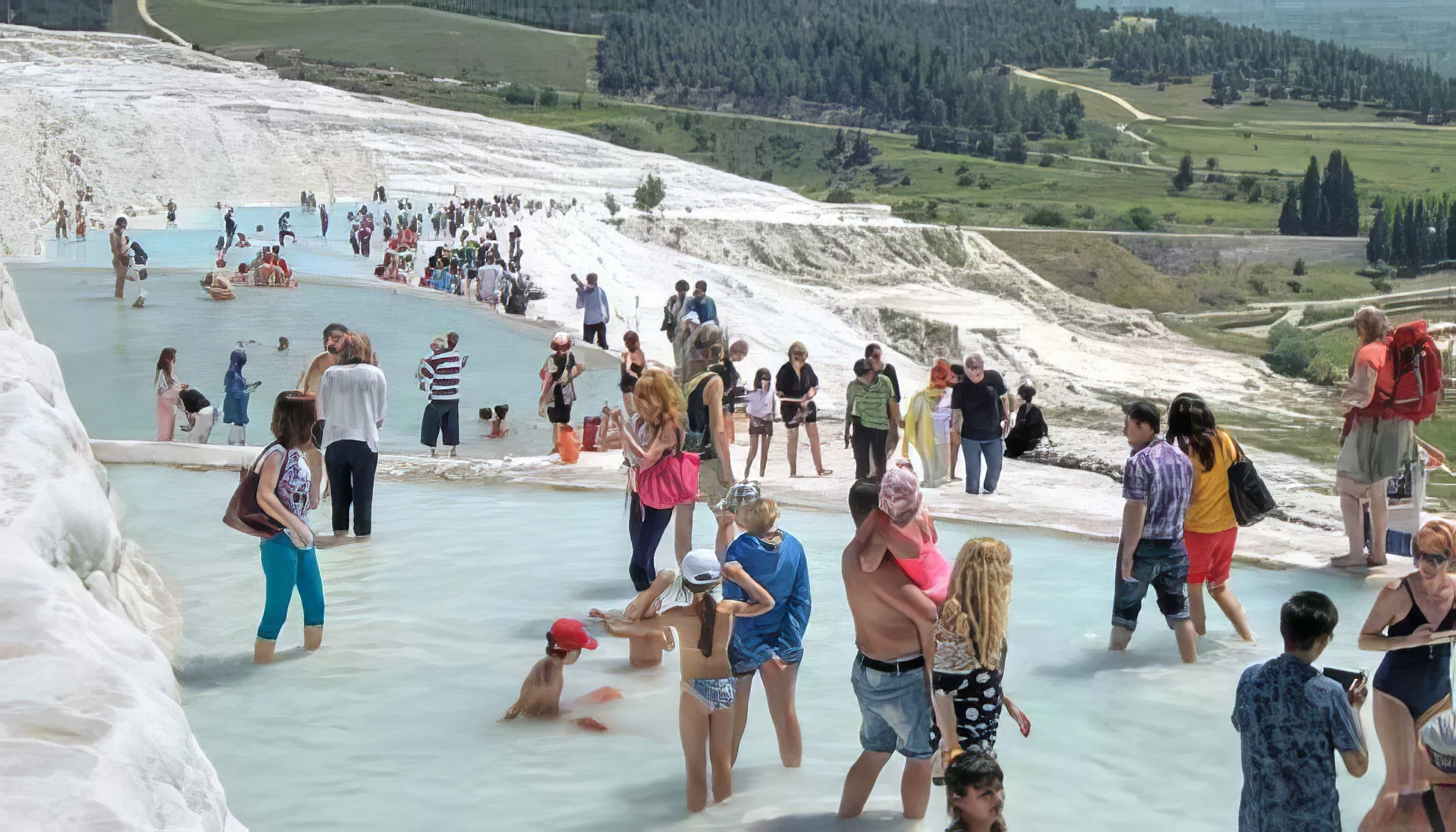
In Pamukkale, travelers can experience unique thermal pools and ancient ruins.
– Hierapolis Archaeological Site: Explore ancient Roman ruins and a well-preserved theater.
– Pamukkale Thermal Pools: Walk on white travertine terraces filled with warm mineral-rich waters.
– Cleopatra's Pool: Swim in a pool with submerged Roman columns.
– Karahayit Thermal Springs: Visit red-colored mineral-rich thermal springs.
– Pamukkale Natural Park: Enjoy scenic views and hiking trails.
Shopping

In the city, tourists can explore small shops offering a variety of local handicrafts. A popular gift to purchase is handmade Turkish textiles, such as towels and scarves, known for their quality and craftsmanship. Another unique souvenir is Turkish delight, a traditional sweet available in many flavors. Additionally, ceramic ware, featuring refined designs and lovely colors, makes for a beautiful and practical gift. Jewelry made from local stones is also a favored choice among visitors. These items not only serve as mementos but also support local artisans.
Arts & Culture

The city is renowned for hosting the Pamukkale International Music and Culture Festival, which features a variety of music performances, cultural exhibitions, and art displays. Additionally, the ancient theater of Hierapolis, part of the city's archaeological site, occasionally serves as a remarkable venue for concerts and festivals, blending historical ambiance with cultural events. The area's rich history is also celebrated through various exhibitions at the Hierapolis Archaeology Museum, where artifacts from the ancient city are displayed. These events and venues highlight the city's commitment to preserving and celebrating its cultural heritage.