

Explore Bhutan: Culture, Cities & Places to Visit
Nestled in the Eastern Himalayas, this kingdom is known for its commitment to Gross National Happiness. It features gorgeous mountain landscapes, traditional monasteries, and a rich cultural heritage. The country prioritizes environmental conservation and maintains a unique approach to development.
- Capital
- Thimphu
- Population
- 0.7 millions
- Superficy
- 47000 sq.km
- Months to Visit
- Mar. to May & Sept. to Nov.
- Living Cost
- Expensive
Overview
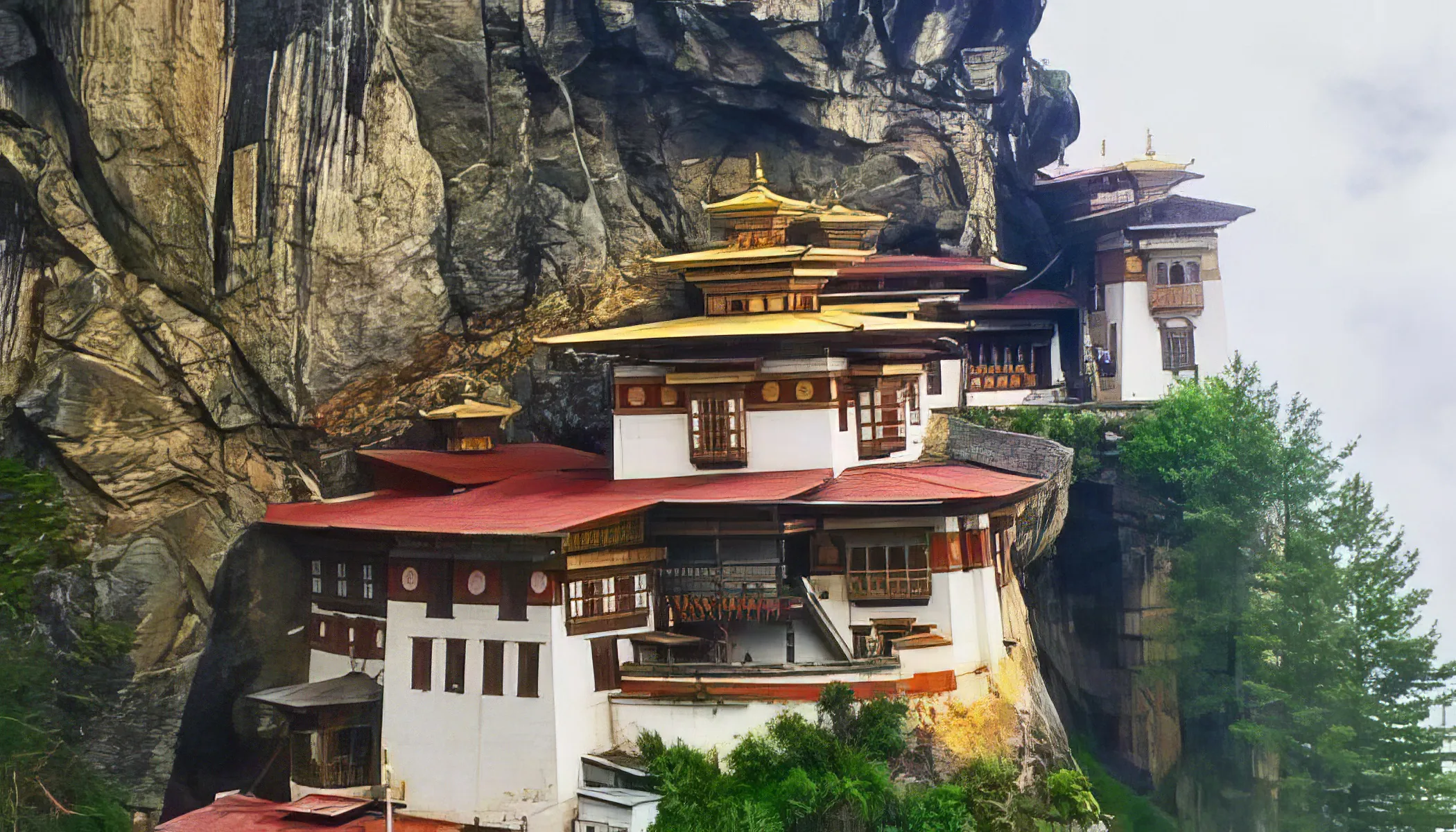
Bhutan, a small landlocked country in the Eastern Himalayas, is known for its unique approach to development, prioritizing Gross National Happiness over economic growth. The capital, Thimphu, blends traditional Bhutanese architecture with modern elements. Bhutan's landscape is characterized by rugged mountains and attractive valleys, offering opportunities for trekking and exploring nature. The country maintains a strong cultural heritage, with lively festivals and well-preserved monasteries like the iconic Paro Taktsang. Tourism is regulated to preserve its environment and culture, requiring visitors to book through licensed operators. Bhutan's commitment to sustainability and cultural preservation makes it a distinctive destination for travelers interested in authentic experiences.
Pros & Cons
GOOD REASONS TO VISIT BHUTAN
– Unique Culture: Experience Bhutan's preserved traditions, beautiful festivals, and distinctive architecture in a deeply spiritual society.
– Gorgeous Scenery: Enjoy breathtaking Himalayan landscapes, abundant valleys, and natural forests with diverse wildlife.
– Gross National Happiness: Bhutan prioritizes well-being over economic growth, offering a unique perspective on development.
– Iconic Monasteries: Visit the famous Tiger's Nest Monastery and other sacred sites perched on cliffs and hills.
– Sustainable Tourism: Bhutan limits tourist numbers to preserve its environment and culture, ensuring an exclusive experience. CHALLENGES WHEN VISITING BHUTAN
– High Daily Tariff: Mandatory daily fee covers accommodation, meals, guide; can be costly for budget travelers.
– Limited Accessibility: Few international flights; travel requires planning and often involves long drives through mountainous terrain.
– Restricted Independent Travel: Tourists must book through licensed operators; limits flexibility for spontaneous exploration.
Before Departure
Before traveling to Bhutan, consider the following essential information:
– Passport: Ensure your passport is valid for at least six months beyond your intended stay.
– Visa: All tourists need a visa, arranged through a licensed tour operator. Visas are typically valid for the duration of the tour.
– Currency: Bhutanese Ngultrum (BTN); Indian Rupees accepted; credit cards limited to major hotels; few ATMs available.
– Internet access: WiFi is available in hotels and cafes in urban areas; SIM cards with data plans can be purchased locally.
– Language barrier: Dzongkha is the official language; English is widely spoken and used in education and government.
What to Pack
Visiting Bhutan requires preparation for its unique climate and cultural experiences, ensuring a respectful and enjoyable trip.
– Essentials: Passport with visa, travel insurance details, flight tickets and itinerary, accommodation confirmations, and local currency or credit cards.
– Clothing: Layered clothing for varying temperatures, comfortable walking shoes, modest attire for religious sites, warm jacket for higher altitudes.
– Health & Safety: Prescription medications, basic first aid kit, sunscreen with high SPF, insect repellent for lower altitudes.
– Electronics: Travel adapter for Bhutanese outlets, mobile phone with international roaming or local SIM card.
Weather
Weather in Bhutan varies significantly across its regions and altitudes:
– Winter (December to February): Cold with clear skies, especially in higher altitudes; mild in southern regions.
– Spring (March to May): Warm and pleasant with blooming flowers; occasional rain showers.
– Summer (June to August): Warm and humid with heavy monsoon rains, particularly in southern areas.
– Autumn (September to November): Cool and dry with clear skies, offering excellent mountain views. The best time to visit Bhutan is during spring (March to May) and autumn (September to November).
– Pros: Pleasant weather, nice festivals, and sensational natural scenery.
– Cons: Higher tourist traffic can lead to increased prices and crowded attractions.
Travel Budget
Traveling in Bhutan can be more expensive due to its tourism policy that emphasizes high-value, low-impact tourism. Here are some average costs for tourists:
– Hotel: 50$ to 300$
– Lunch: 5$ to 20$
– Beverage (in bar/restaurant): 2$ to 8$
– Coffee: 1.5$ to 4$
– Transportation: (taxi /10km 5$ to 15$)
– Mobile data (per GB): 2$ to 5$
Language
Dzongkha is the official language of Bhutan, and here are some useful phrases for tourists:
– Hello: Kuzu zangpo la
– Thank you: Kadrin chhe la
– Please: Kuenzang chhi
– How much is this?: Gadem chi mo?
– Excuse me: Tsip maza
– I don't understand: Nga ma thuem bay
– Yes: Inn
– No: Men
– Goodbye: Log jay gay
History
Its early history is marked by the influence of Tibetan Buddhism, which became the dominant religion in the 7th century. The unification of Bhutan occurred in the 17th century under the leadership of Ngawang Namgyal, who established a dual system of governance combining religious and civil administration. In 1907, Ugyen Wangchuck became the first king, founding the hereditary monarchy. The country maintained its independence by signing treaties with British India and later with independent India. In 2008, Bhutan transitioned from an absolute monarchy to a constitutional monarchy with its first democratic elections. Throughout its history, Bhutan has focused on preserving its cultural heritage and prioritizing Gross National Happiness over economic growth.
Geopolitics
Nestled in the Eastern Himalayas, Bhutan is a landlocked country bordered by China to the north and India to the south, east, and west. It maintains a cautious foreign policy, prioritizing its sovereignty and cultural preservation. Bhutan has no formal diplomatic relations with China, focusing instead on strong ties with India, which plays a significant role in its economic and security matters. The country is not a member of the United Nations but participates in regional organizations like SAARC (South Asian Association for Regional Cooperation). Bhutan's geopolitical strategy emphasizes environmental conservation and Gross National Happiness as guiding principles for development. Its location between two major powers influences its careful diplomatic balancing act to maintain stability and independence.
Sample Itinerary
This itinerary covers Bhutan's cultural heritage, beautiful landscapes, and spiritual sites in Thimphu, Punakha, and Paro.
– 2 days in Thimphu: Visit the National Memorial Chorten, Tashichho Dzong, and Buddha Dordenma. Explore local markets and the Folk Heritage Museum.
– 1 day in Punakha: Tour Punakha Dzong at the confluence of two rivers. Walk across the longest suspension bridge in Bhutan.
– 1 day in Paro: Hike to Taktsang Monastery (Tiger's Nest) perched on a cliff. Visit Rinpung Dzong and explore Paro town.
– 1 day in Haa Valley: Experience traditional Bhutanese life with a visit to remote villages. Enjoy scenic views of the valley and surrounding mountains.
Popular cities
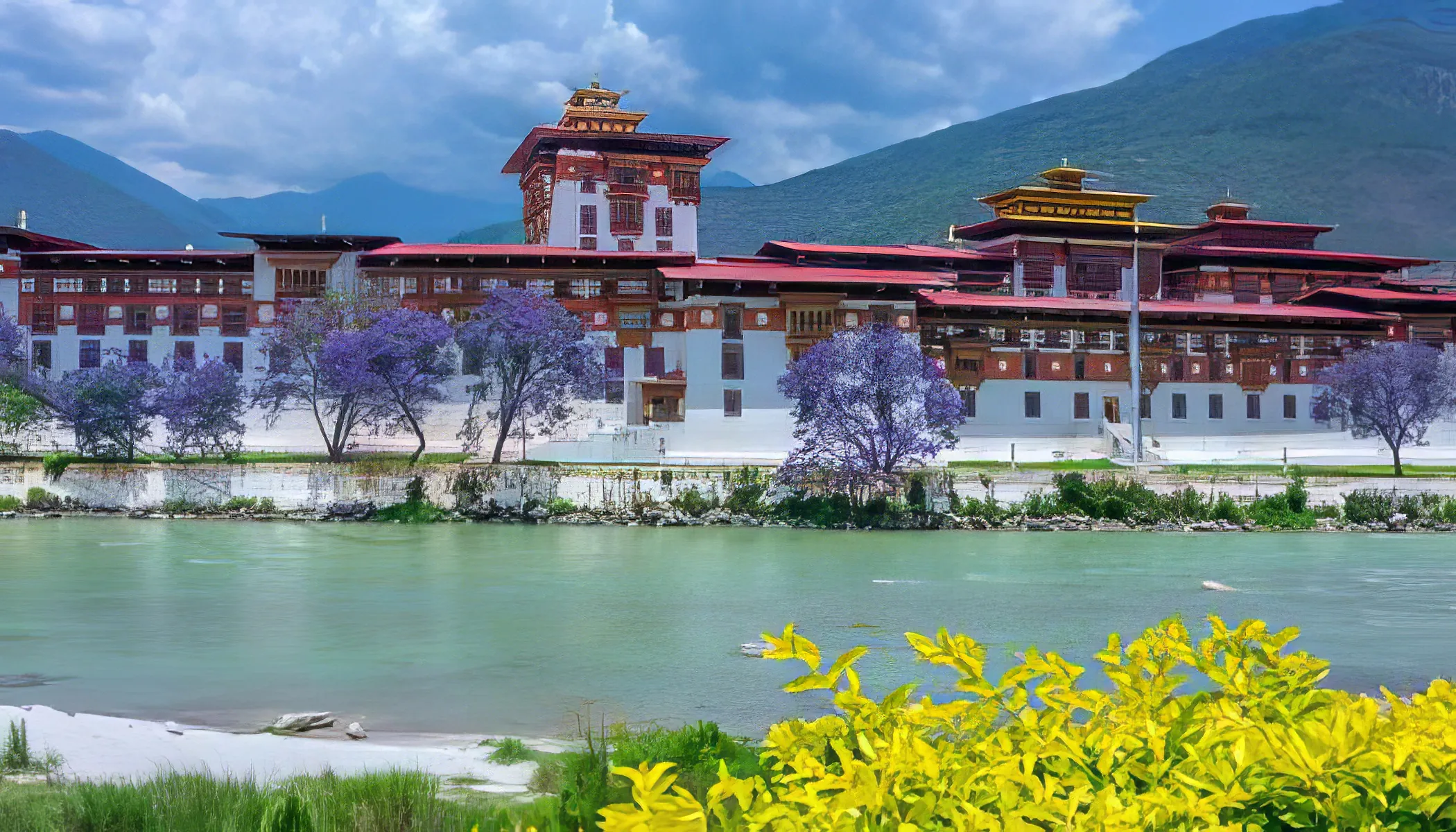
Explore Bhutan's unique blend of culture, tradition, and natural beauty in these cities:
– Thimphu: The capital city provides a mix of modern development and traditional Bhutanese culture.
– Paro: Known for the iconic Tiger's Nest Monastery and beautiful valley landscapes.
– Punakha: Famous for the Punakha Dzong, a beautiful fortress at the confluence of two rivers.
– Jakar: Located in the Bumthang Valley, it's known for its monasteries and scenic beauty.
– Phobjikha Valley (Gangtey): A glacial valley famous for black-necked cranes and calm landscapes.
– Haa: A lesser-known valley offering traditional villages and untouched nature.
– Trongsa: Home to the impressive Trongsa Dzong, an important historical site.
Monuments
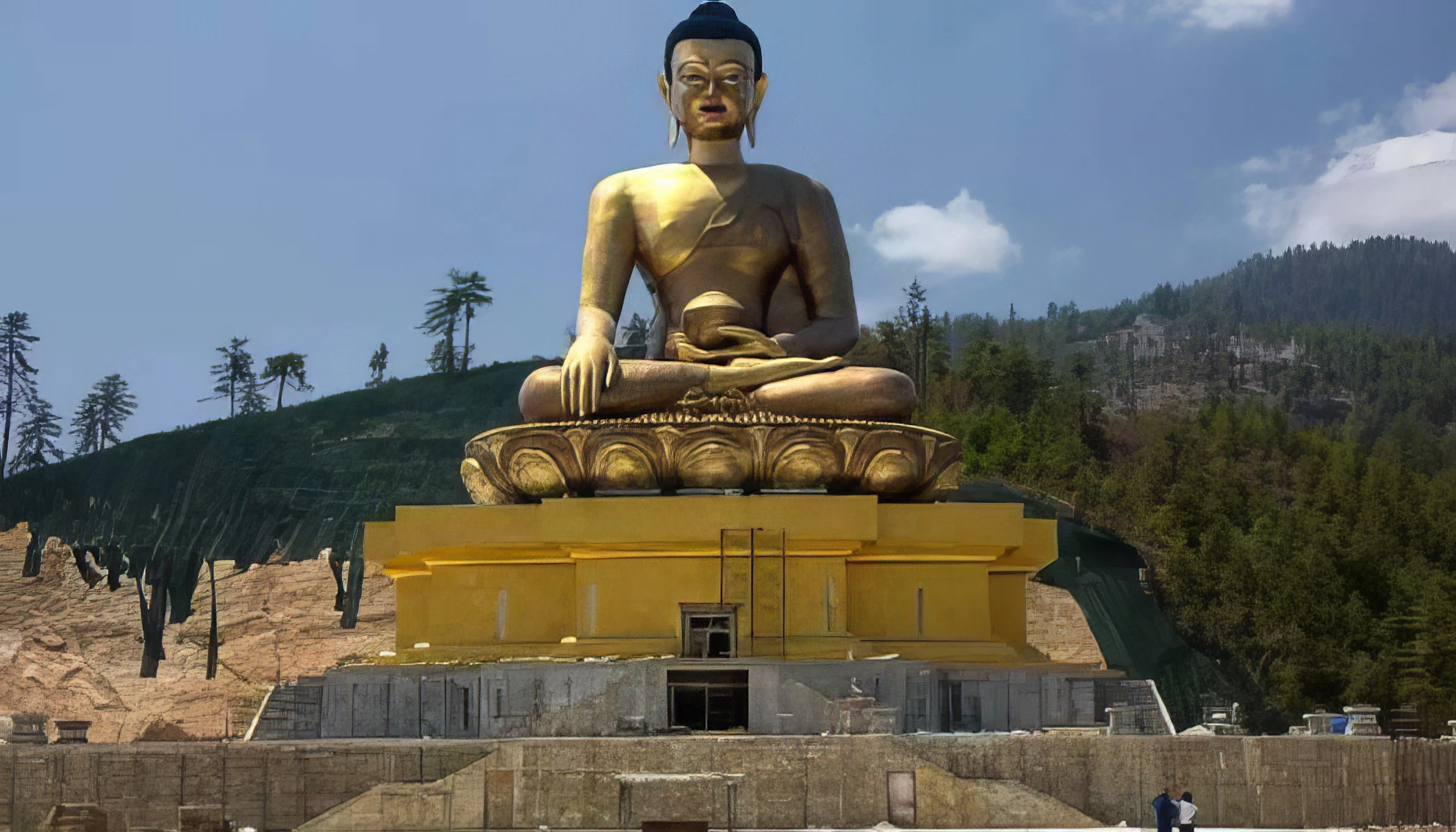
Bhutan is home to several significant monuments reflecting its rich culture and history:
– Paro Taktsang (Tiger's Nest Monastery): Iconic cliffside monastery, a major pilgrimage site with nice views.
– Punakha Dzong: Historic fortress at the confluence of two rivers, known for its beautiful architecture.
– Tashichho Dzong, Thimphu: Government seat and monastic center with impressive traditional Bhutanese design.
– Rinpung Dzong, Paro: Fortress-monastery with beautiful woodwork and annual religious festivals.
– Trongsa Dzong: Largest dzong in Bhutan, strategically located overlooking the Mangde River.
– Jambay Lhakhang, Bumthang: One of Bhutan's oldest temples, believed to be built in the 7th century.
– Chimi Lhakhang, Punakha: Fertility temple dedicated to Lama Drukpa Kunley, known as the "Divine Madman."
– Memorial Chorten, Thimphu: Prominent stupa built in memory of Bhutan's third king with daily rituals.
Natural wonder
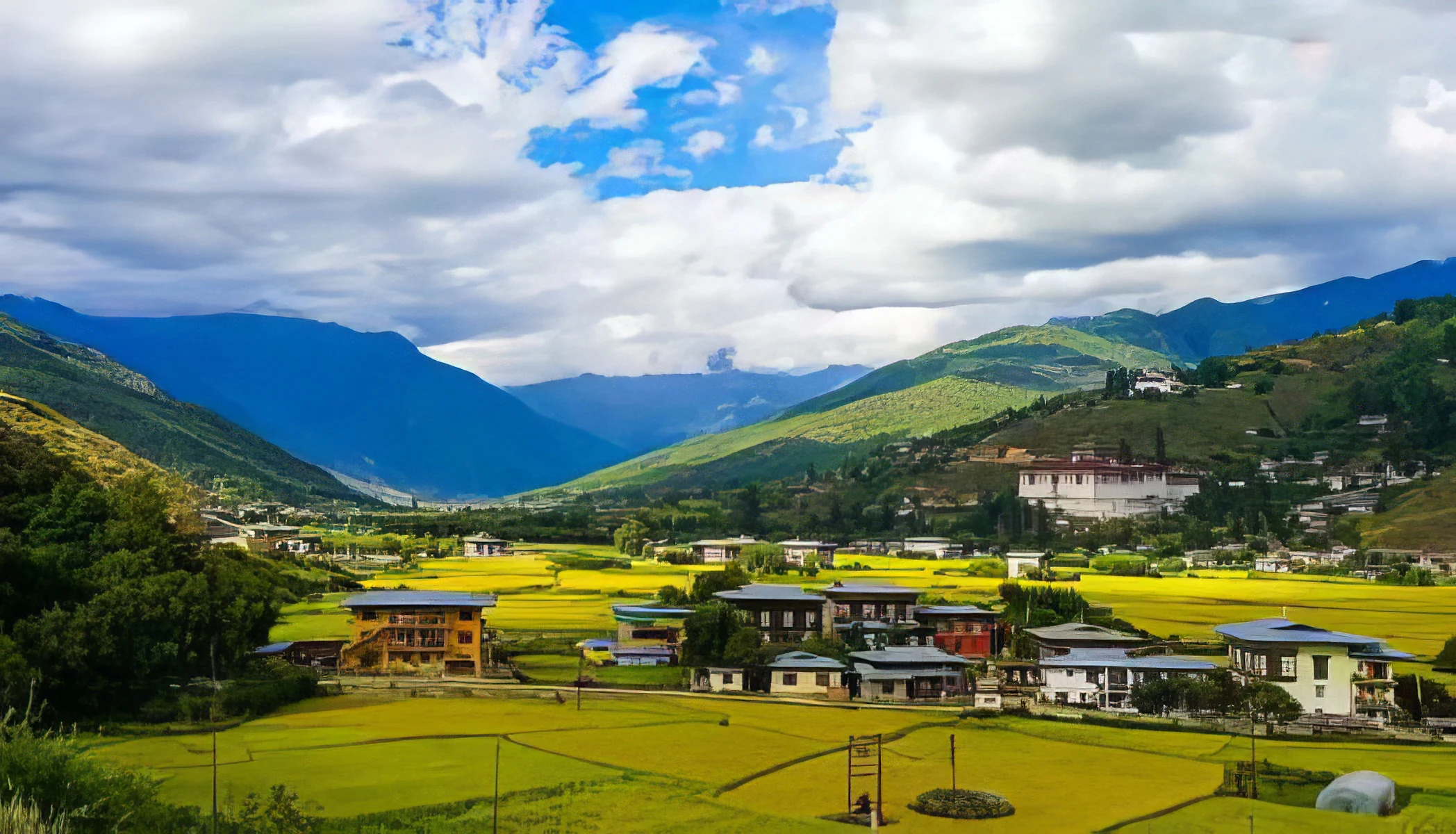
Explore Bhutan's remarkable natural landscapes:
– Paro Valley: Known for its pleasant landscapes and historic sites, including the famous Tiger's Nest Monastery.
– Phobjikha Valley: A glacial valley and winter home to the endangered black-necked cranes.
– Jigme Dorji National Park: Provides diverse wildlife and is home to Mount Jomolhari.
– Bumthang Valley: Renowned for its rich culture, temples, and scenic beauty.
– Haa Valley: A hidden gem with preserved forests and traditional villages.
– Chele La Pass: The highest motorable pass in Bhutan with panoramic views of the Himalayas.
– Punakha Valley: Known for its fertile land, rivers, and the historic Punakha Dzong.
– Black Mountain National Park: Features diverse ecosystems and is a haven for birdwatchers.
– Lhuentse Valley: Supplies remote beauty with traditional weaving villages and monasteries.
– Thrumshingla National Park: Home to rare flora and fauna, offering rugged terrain and scenic trails.
Outdoor activities
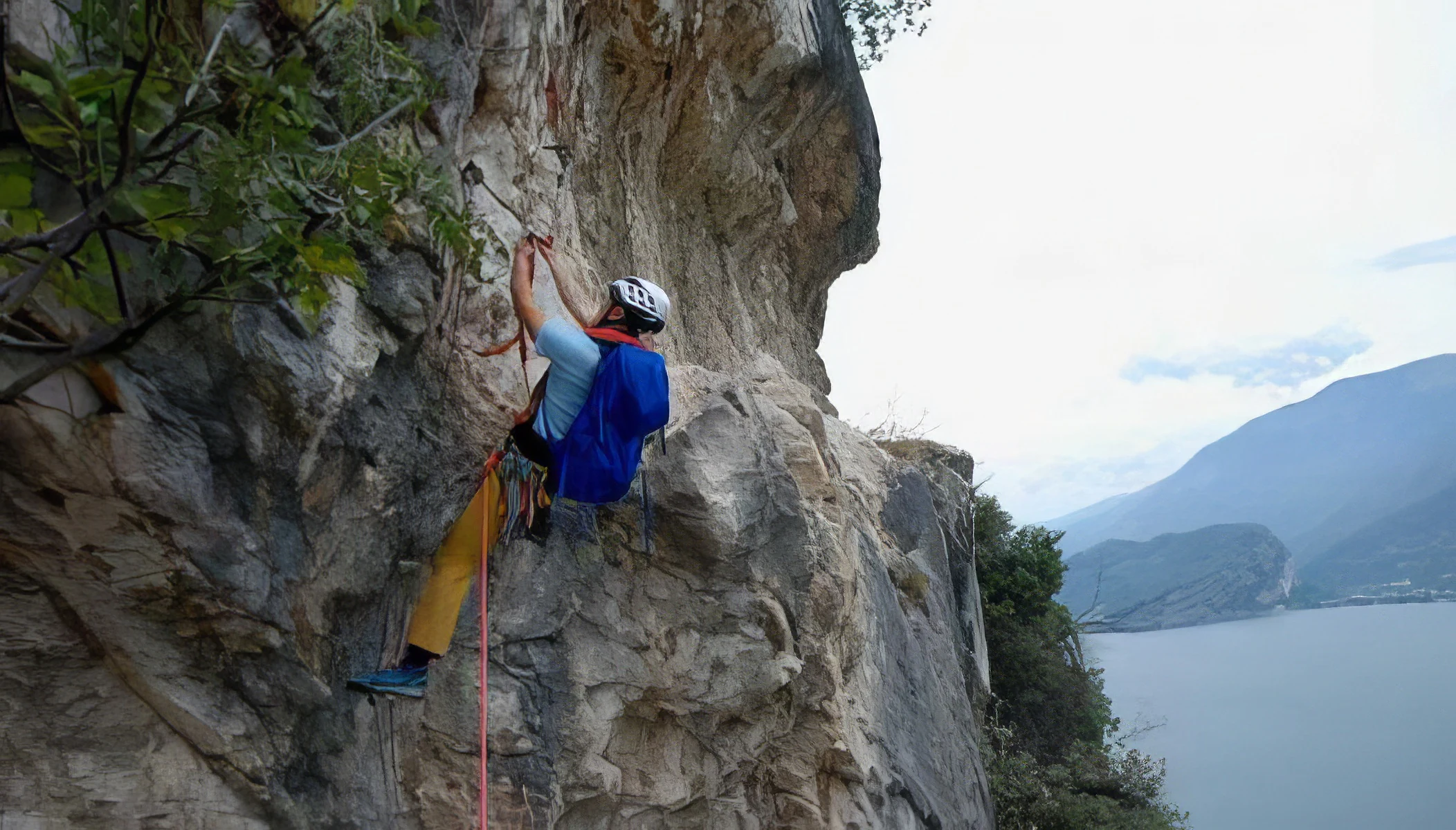
Bhutan supplies unique outdoor experiences amidst its gorgeous landscapes and rich culture:
– Trekking the Snowman Trek: Challenge yourself on one of the world's toughest high-altitude treks.
– Rafting in Punakha: Navigate the thrilling rapids of the Pho Chhu and Mo Chhu rivers.
– Hiking to Tiger's Nest Monastery: Ascend to this iconic cliffside monastery with panoramic valley views.
– Birdwatching in Phobjikha Valley: Spot rare black-necked cranes in their winter habitat.
– Cycling in Paro Valley: Enjoy scenic rides through traditional villages and lush landscapes.
– Camping in Bumthang: Experience relaxed nights under the stars in Bhutan's spiritual heartland.
– Archery in Thimphu: Try Bhutan's national sport at local archery grounds.
Kid Friendly
Bhutan provides several engaging activities for children to enjoy:
– Paro Taktsang (Tiger's Nest): A scenic hike to a famous monastery perched on a cliffside.
– Motithang Takin Preserve: A wildlife reserve where kids can see Bhutan's national animal, the takin.
– Punakha Suspension Bridge: A long, swaying bridge offering thrilling views over the river below.
– Dochula Pass: A mountain pass with 108 chortens and panoramic views of the Himalayas.
– National Folk Heritage Museum: An interactive museum showcasing traditional Bhutanese rural life.
– Royal Botanical Park, Lampelri: A park with diverse flora and fauna, ideal for nature walks.
– Simply Bhutan Museum: An immersive experience into Bhutanese culture with hands-on activities for kids.
– Bumthang Owl Trek: A family-friendly trek through forests and villages, offering cultural insights and nature exploration.
Cuisine
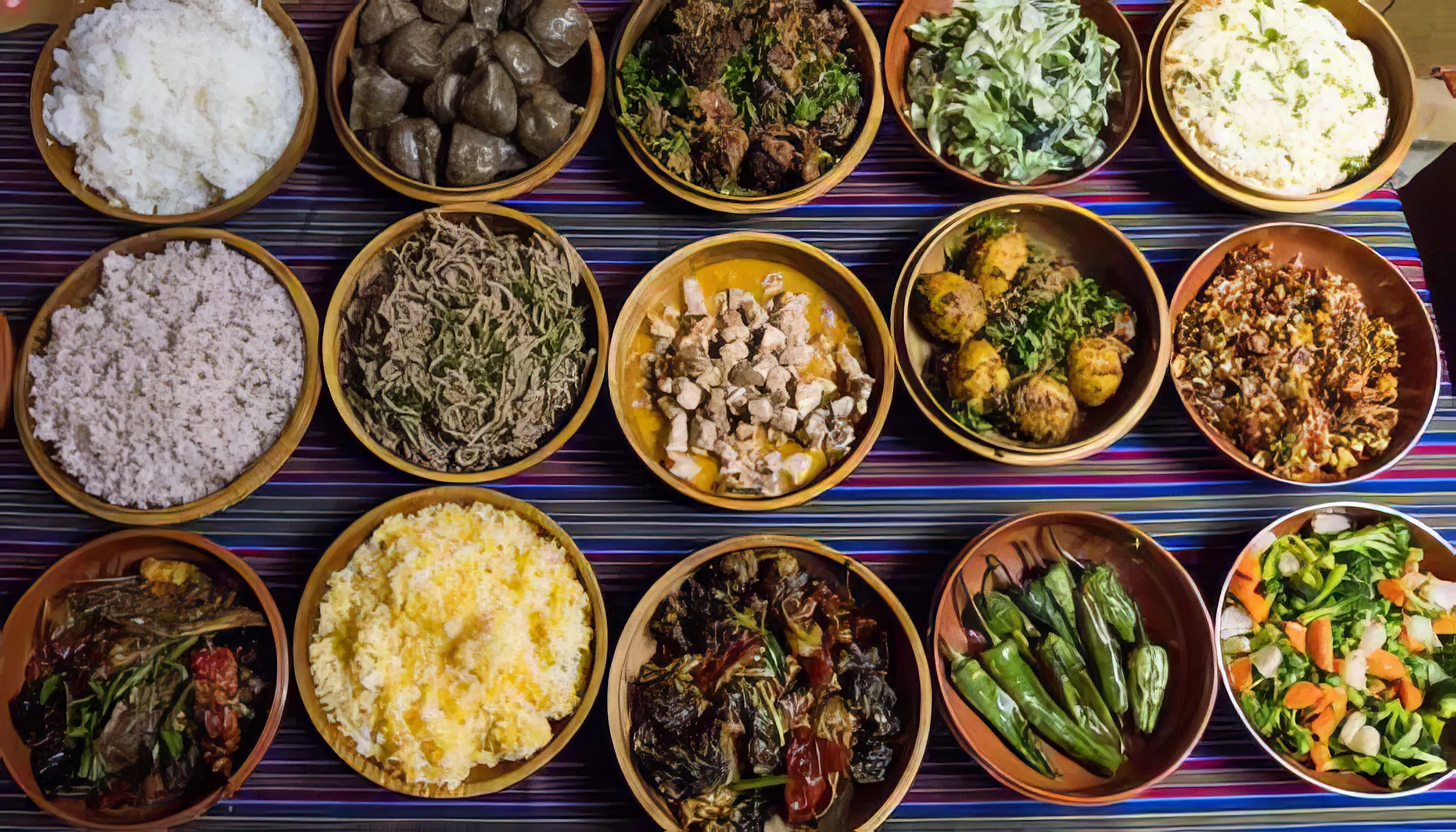
Bhutanese cuisine is characterized by its bold use of chilies and cheese, creating spicy and hearty dishes. Rice, especially red rice, is a staple, often accompanied by flavorful curries. The food reflects the country's mountainous terrain and cultural traditions. Most famous cuisine in Bhutan are:
– Ema Datshi: Spicy stew made with chilies and cheese, considered the national dish.
– Phaksha Paa: Pork cooked with radishes or spinach in a spicy chili sauce.
– Jasha Maru: Spicy chicken curry with tomatoes, ginger, garlic, and chilies.
– Red Rice: Nutty-flavored rice grown in Bhutan's fertile valleys.
– Suja: Traditional butter tea made with tea leaves, butter, and salt.
Souvenir
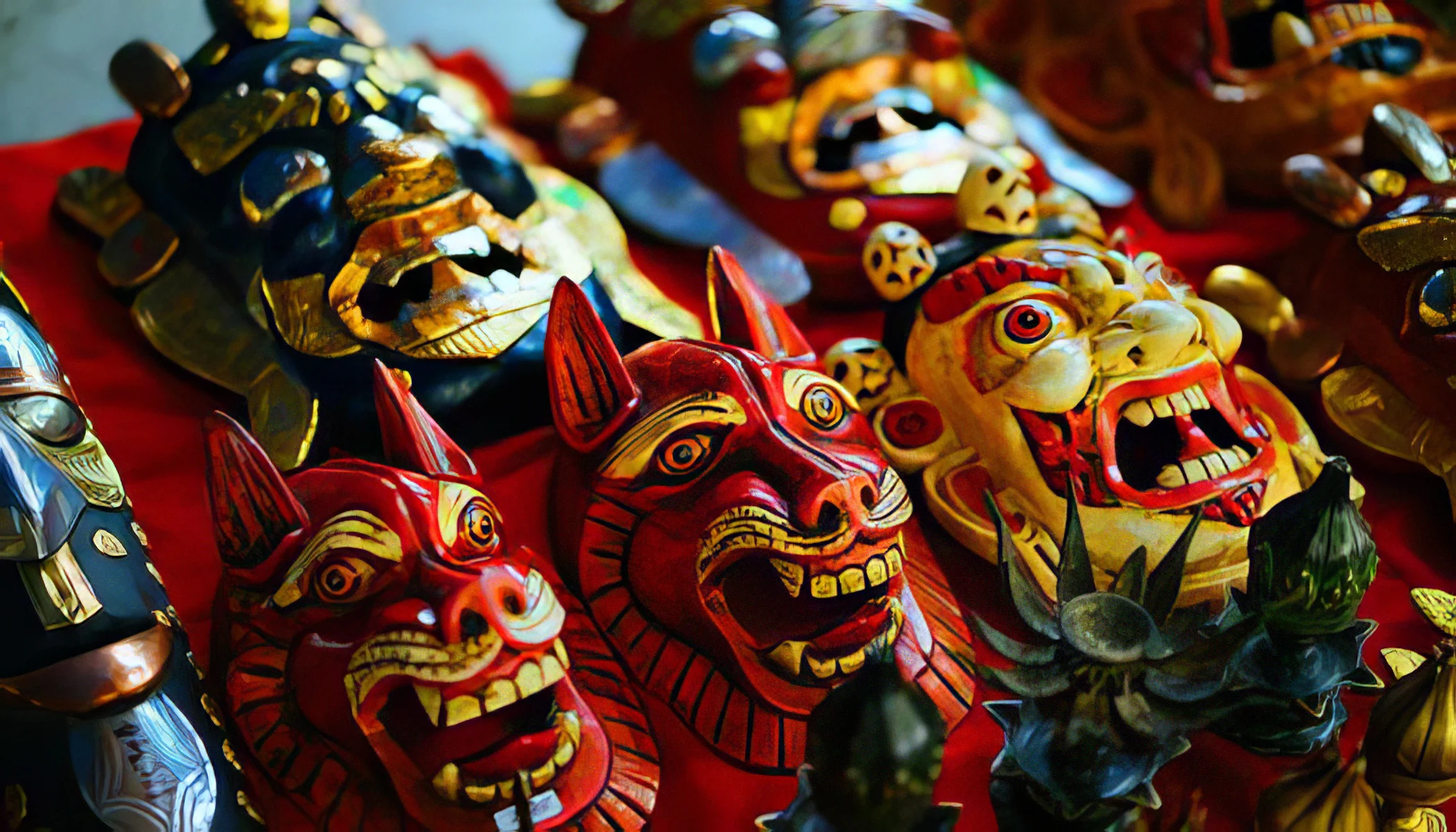
Known for its rich culture and traditional crafts, Bhutan supplies unique souvenirs. Here are some popular options:
– Handwoven Textiles: Bhutanese textiles are known for their intricate patterns and energetic colors, often used in traditional clothing.
– Thangka Paintings: These religious scroll paintings depict Buddhist deities and are highly detailed.
– Handmade Paper: Made from the bark of the Daphne plant, Bhutanese paper is used for writing and art.
– Wooden Masks: Used in traditional dances, these masks are colorful and intricately carved.
– Dzi Beads: Considered to bring good luck, these agate beads are often worn as jewelry.
– Yak Wool Products: Warm and durable, yak wool is used to make blankets, scarves, and clothing.
– Incense Sticks: Made from natural ingredients, Bhutanese incense is used in religious ceremonies.
Traditional Shows
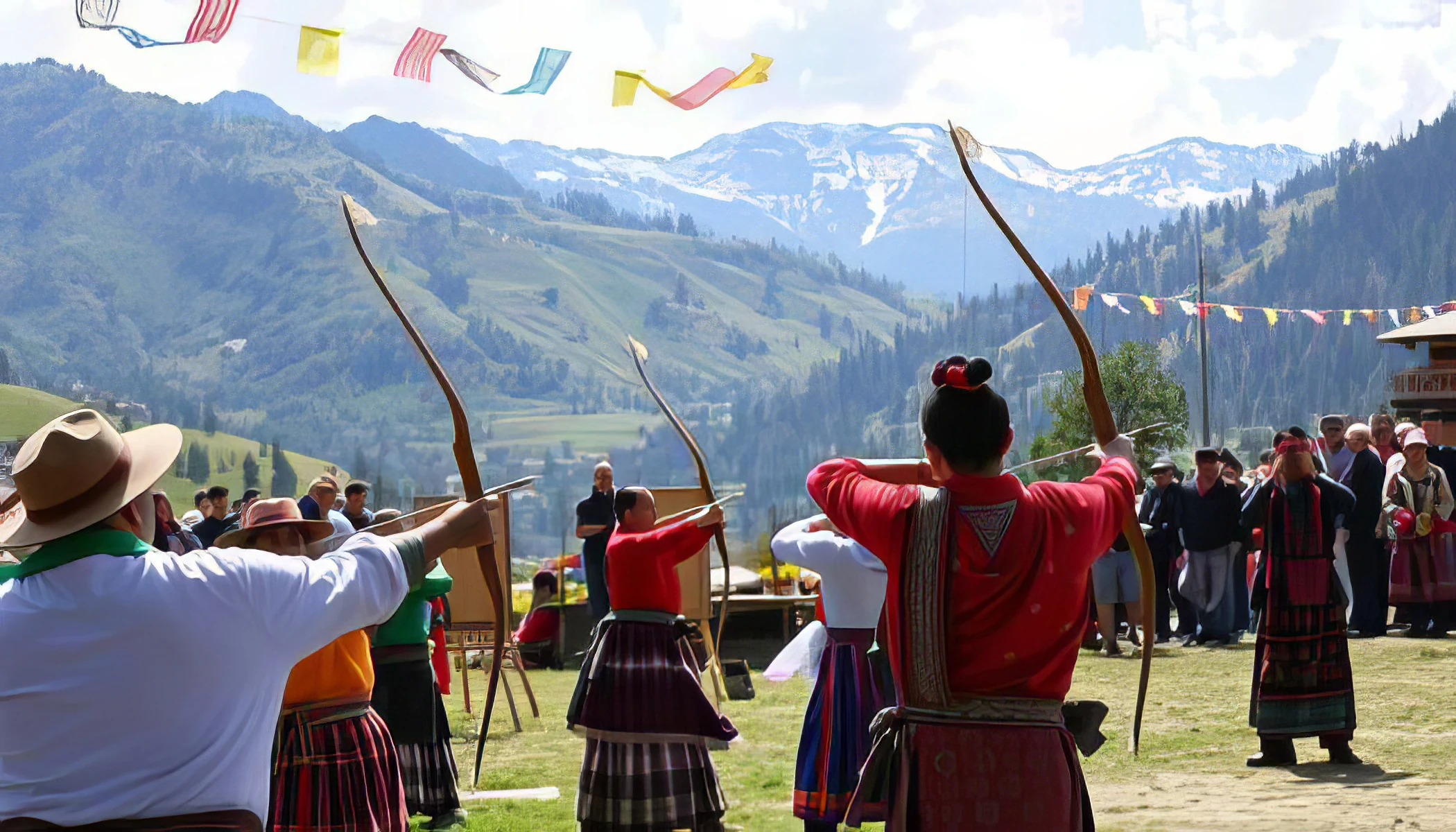
Bhutan provides unique traditional performances:
– Cham Dance: Witness masked dances performed by monks during religious festivals, showcasing Bhutanese spirituality and culture.
– Folk Songs: Experience traditional Bhutanese folk songs that narrate stories of daily life and history, often performed at local gatherings.
– Dramyin Cham: Enjoy this sacred dance accompanied by the Dramyin, a traditional Bhutanese string instrument, highlighting spiritual themes.
– Zhungdra Music: Listen to this classical Bhutanese music style characterized by slow melodies and deep spiritual lyrics, reflecting the country's heritage.
– Boedra Dance: Observe lively dances with pleasant costumes that celebrate Bhutan's cultural diversity and are often seen during festivals.
Events & Festivals
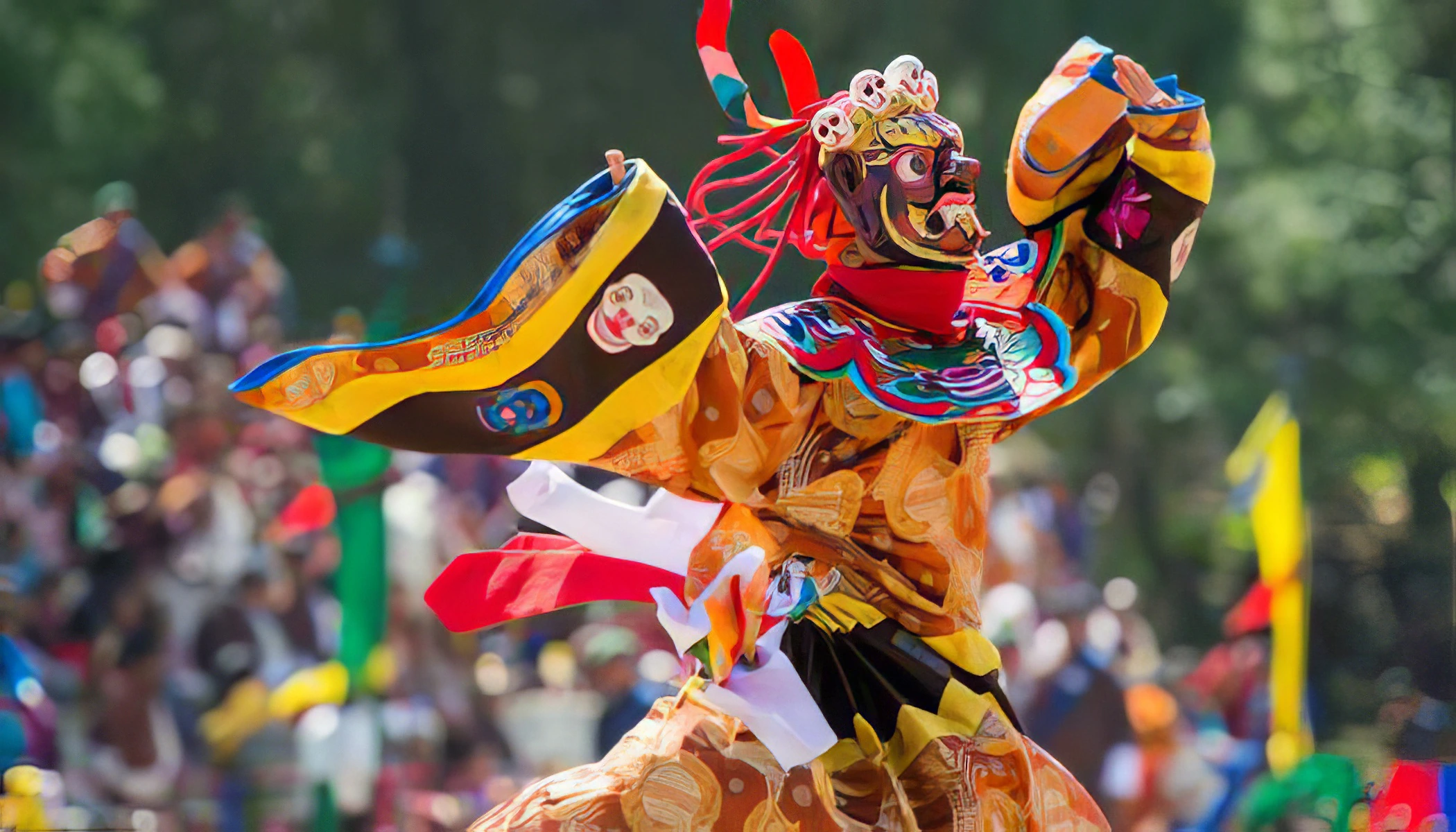
Bhutan hosts several animated festivals throughout the year, reflecting its rich cultural heritage:
– Punakha Drubchen: February/March festival in Punakha with historical reenactments and traditional dances.
– Paro Tshechu: March/April event featuring masked dances and religious rituals in Paro.
– Ura Yakchoe: May festival in Ura Valley, showcasing local dances and a sacred relic.
– Haa Summer Festival: July celebration of nomadic culture with sports, food, and crafts in Haa Valley.
– Thimphu Tshechu: September/October festival with colorful dances and rituals in Bhutan's capital.
– Jambay Lhakhang Drup: October/November event at Jambay Lhakhang temple, known for fire dances and mask performances.
– Black-Necked Crane Festival: November celebration at Phobjikha Valley, focusing on conservation efforts for the cranes.
Famous People
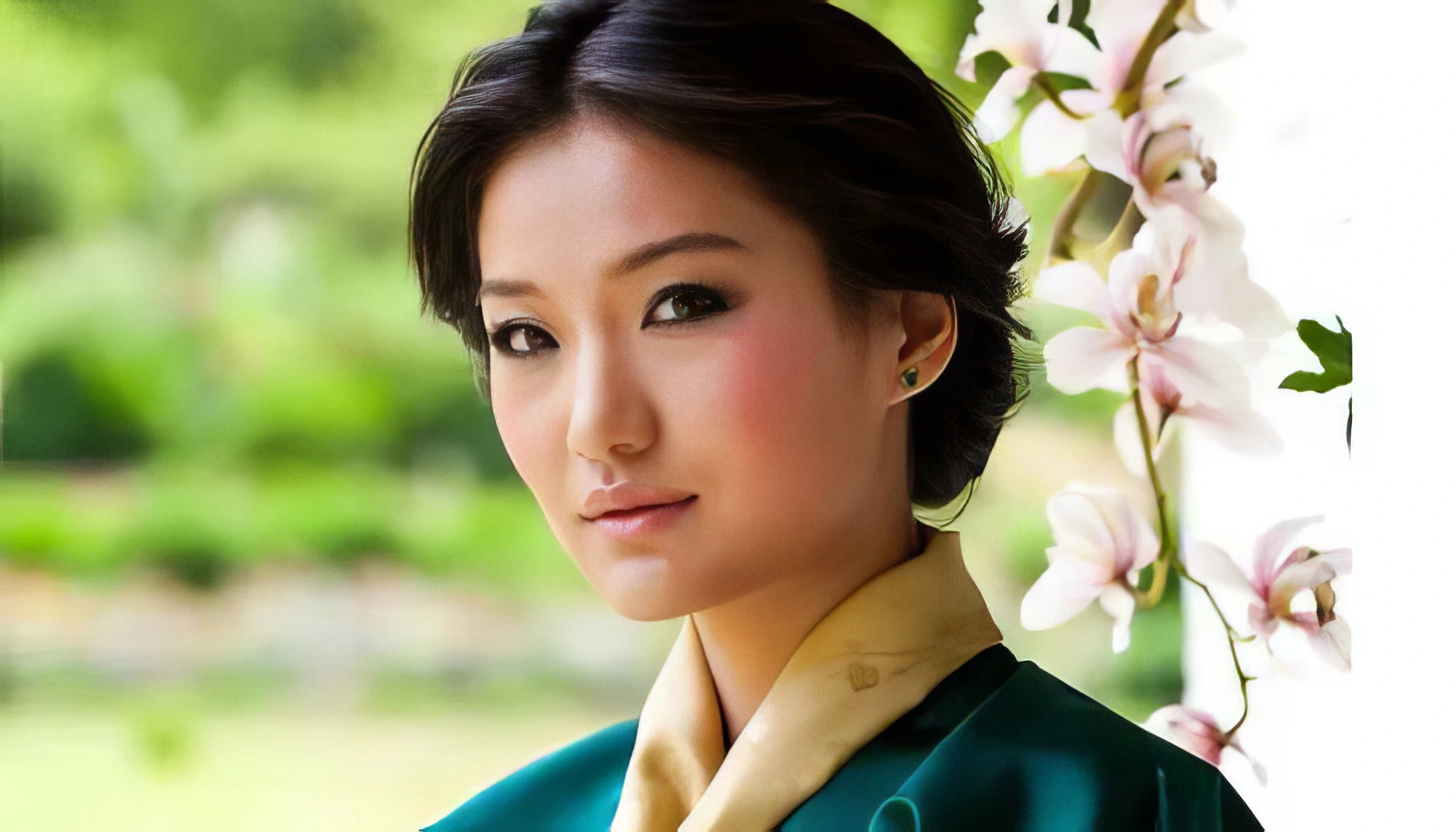
Bhutan, a nation known for its unique culture and Gross National Happiness, has notable figures in various fields.
– Jigme Singye Wangchuck (born 1955, Thimphu): Fourth King of Bhutan who introduced the concept of Gross National Happiness.
– Ugyen Wangchuck (1862 to 1926, Bumthang): First King of Bhutan who unified the country and established the monarchy.
– Jetsun Pema (born 1990, Thimphu): Queen consort known for her charitable work and modernizing influence in Bhutan.
– Zhabdrung Ngawang Namgyal (1594 to 1651, Tibet): Tibetan lama who unified Bhutan and established its dual system of governance.
– Tshering Tobgay (born 1965, Haa): Former Prime Minister recognized for promoting democracy and environmental sustainability in Bhutan.
Books
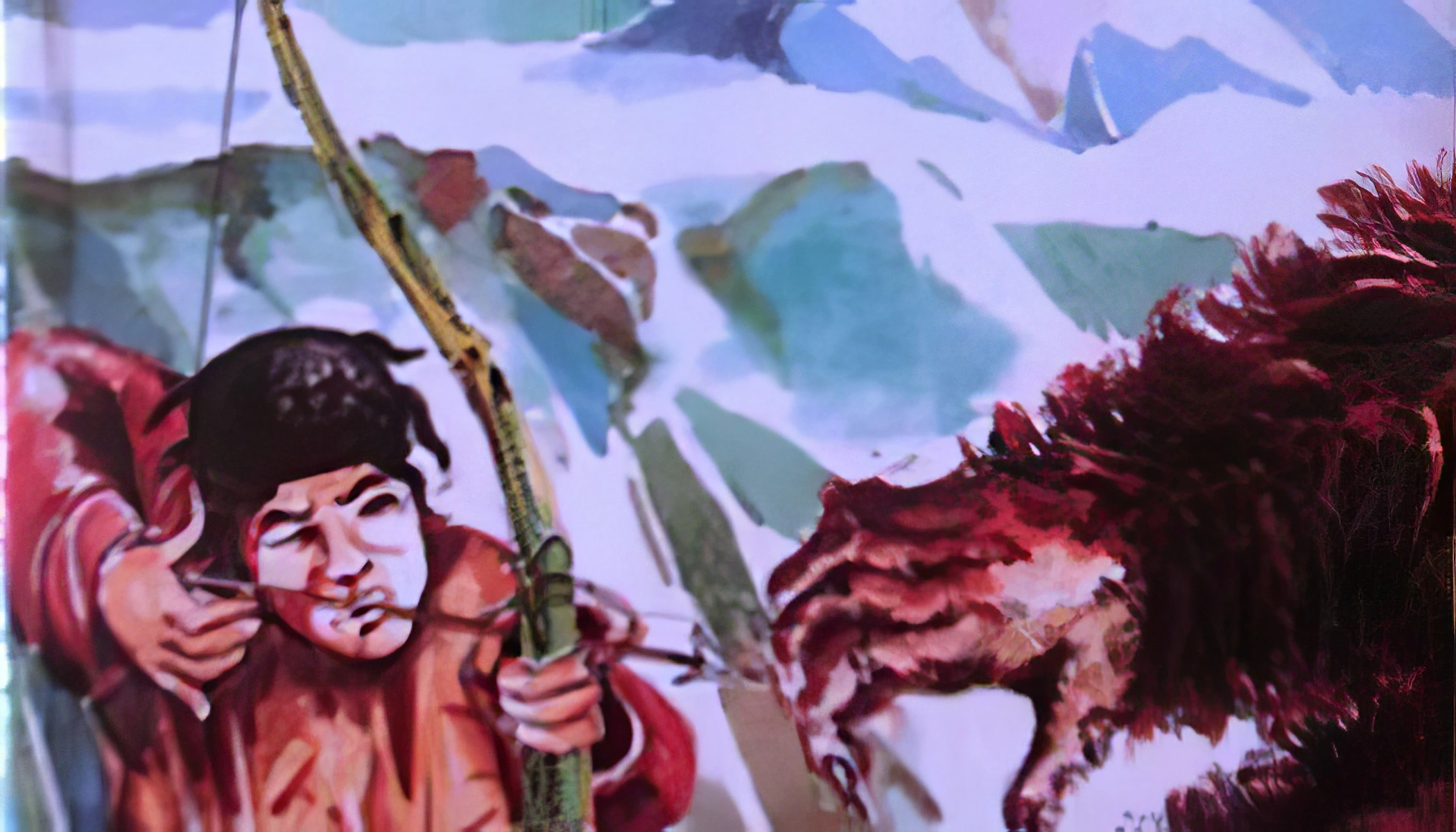
These books provide insights into Bhutan's unique culture, spirituality, and the challenges of modernization.
– "Beyond the Sky and the Earth: A Journey into Bhutan" by Jamie Zeppa: Memoir of a Canadian teacher's transformative experiences in Bhutan.
– "Treasures of the Thunder Dragon: A Portrait of Bhutan" by Ashi Dorji Wangmo Wangchuck: Blends memoir, history, and folklore from Bhutan's Queen Mother.
– "The Circle of Karma" by Kunzang Choden: Follows a Bhutanese woman's journey through life's challenges and self-discovery.
– "Radio Shangri-La: What I Learned in Bhutan, the Happiest Kingdom on Earth" by Lisa Napoli: Chronicles an American's life-changing experience working at a radio station in Bhutan.
– "Married to Bhutan: How One Woman Got Lost, Said 'I Do,' and Found Bliss" by Linda Leaming: An American woman's story of finding love and happiness in Bhutan.
Songs
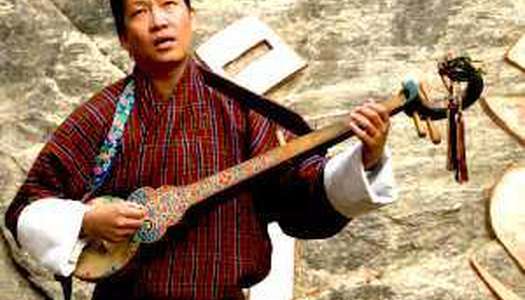
Bhutanese music often reflects the country's rich cultural heritage and spiritual themes.
– Zhungdra: Traditional Bhutanese song style, known for its slow tempo and spiritual lyrics.
– Boedra: Popular folk music style in Bhutan, characterized by lively rhythms and dance.
– Gasa Lamai Singye: A classic Bhutanese love song that tells a tale of romance and devotion.
– Yak Legbi Lhadar: Celebrates the life of yak herders in Bhutan's highlands with traditional melodies.
– Druk Tshenden: A patriotic song that evokes national pride and unity among the Bhutanese people.
Films
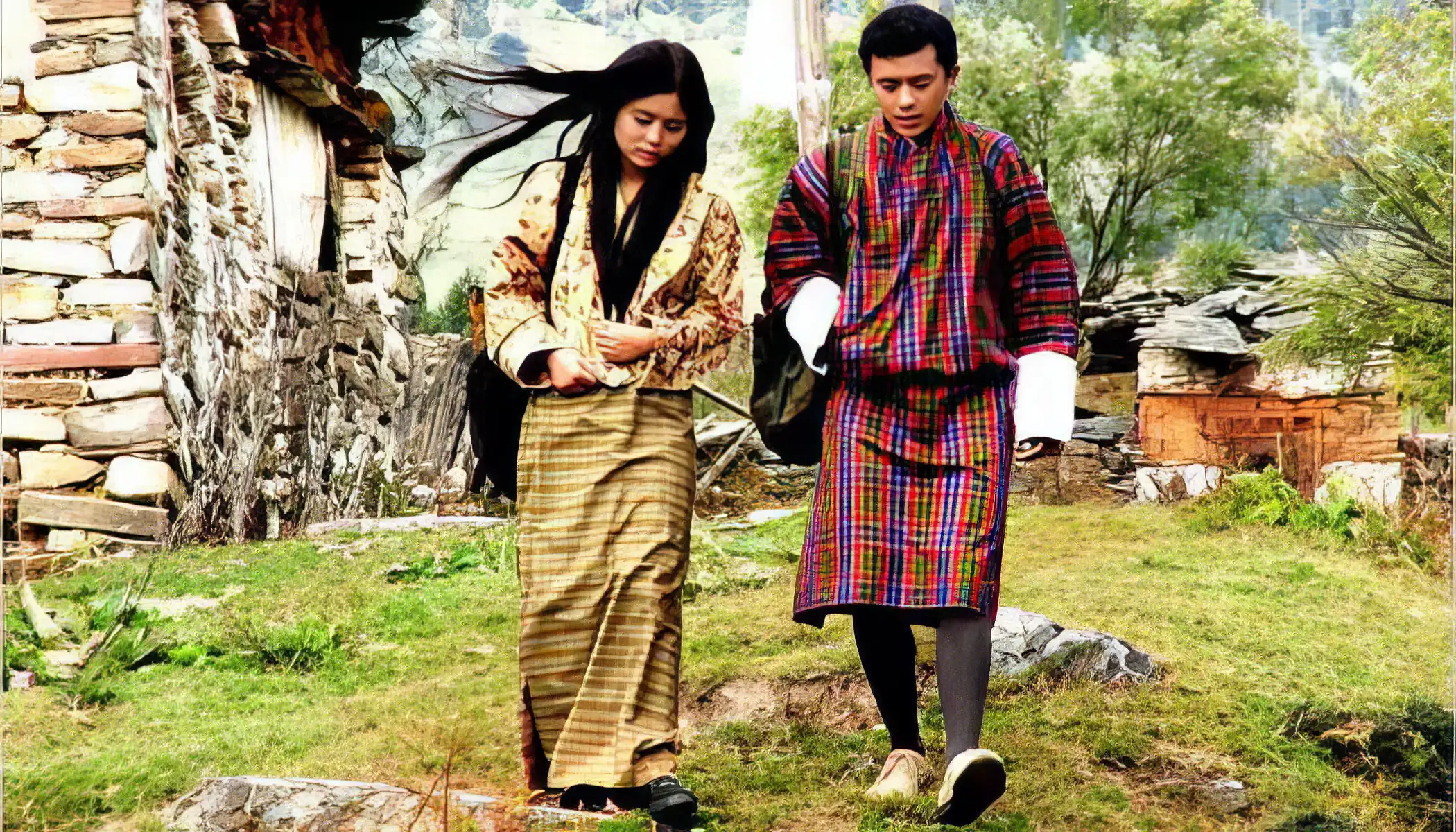
Explore the cinematic landscape of Bhutan through these notable films:
– "The Cup": Directed by Khyentse Norbu, this film humorously depicts young monks' obsession with the World Cup.
– "Travellers and Magicians": Khyentse Norbu's film intertwines two stories exploring dreams and reality in rural Bhutan.
– "Hema Hema: Sing Me a Song While I Wait": Directed by Khyentse Norbu, it delves into identity and anonymity in a masked retreat.
– "Lunana: A Yak in the Classroom": Pawo Choyning Dorji's film follows a teacher's transformative journey to a remote Himalayan school.
– "Honeygiver Among the Dogs": Dechen Roder's mystery thriller blends Buddhist mysticism with noir elements in Bhutanese settings.