

Explore Turkmenistan: Culture, Cities & Places to Visit
Located in Central Asia, this country is known for its vast deserts and the ancient Silk Road city of Merv. It has a rich cultural heritage and significant natural gas reserves. The capital, Ashgabat, is noted for its unique architecture.
- Capital
- Ashgabat
- Population
- 5 millions
- Superficy
- 489000 sq.km
- Months to Visit
- April to June & Sept. to Oct.
- Living Cost
- Moderate
Overview
Turkmenistan is located in Central Asia, bordered by the Caspian Sea to the west. The capital city, Ashgabat, is known for its white marble buildings and grandiose architecture. The country has significant natural gas reserves, which play a crucial role in its economy. Turkmenistan's landscape includes vast deserts, notably the Karakum Desert, and historical sites like the ancient city of Merv. The nation maintains a policy of neutrality and has limited political freedoms. Its cultural heritage reflects a blend of Turkic traditions and influences from its historical Silk Road connections.
Pros & Cons
GOOD REASONS TO VISIT TURKMENISTAN
– Unique Architecture: Ashgabat features grand, marble-clad buildings and monuments, showcasing modern architectural styles.
– Ancient History: Explore Merv and Konye-Urgench, significant Silk Road sites with rich historical backgrounds.
– Darvaza Gas Crater: Witness the "Door to Hell," a fiery natural gas crater burning for decades.
– Traditional Culture: Experience Turkmen crafts, music, and dance reflecting deep-rooted nomadic traditions.
– Rug Weaving Heritage: Discover exquisite Turkmen carpets, renowned for intricate designs and craftsmanship. CHALLENGES WHEN VISITING TURKMENISTAN
– Strict Visa Regulations: Obtaining a visa can be complex; often requires an invitation or guided tour booking.
– Limited Infrastructure: Travel outside major cities can be challenging due to underdeveloped transport and accommodation facilities.
– Restricted Internet Access: Internet is heavily censored; limited access to many websites and social media platforms.
Before Departure
Before traveling to Turkmenistan, it's essential to be aware of the following details:
– Passport: Ensure your passport is valid for at least six months beyond your intended stay.
– Visa: All tourists need a visa; apply through an embassy or consulate. A letter of invitation is required, typically arranged by a travel agency.
– Currency: Turkmenistani Manat (TMT); credit cards are rarely accepted; cash is preferred. ATMs are limited and often unreliable.
– Internet access: Internet access is limited and censored; WiFi in hotels may be slow. Consider purchasing a local SIM card for better connectivity.
– Language barrier: Turkmen is the official language; Russian is widely spoken. English is not commonly spoken, so learning basic phrases can be helpful.
What to Pack
Traveling to Turkmenistan requires preparation due to its unique cultural and environmental conditions.
– Essentials: Passport with visa, travel insurance, printed itinerary, hotel confirmations, and local currency (Manat).
– Clothing: Modest clothing covering shoulders and knees, comfortable walking shoes, a hat for sun protection, and a light jacket for cooler evenings.
– Health & Safety: Prescription medications, basic first aid kit, insect repellent, sunscreen with high SPF, and personal hygiene products.
– Electronics: Travel adapter for Type C or F outlets, mobile phone with charger, camera for photography.
Weather
Turkmenistan experiences an arid desert climate with extreme temperatures and low precipitation.
– Winter (December to February): Cold with temperatures ranging from -6°C to 12°C, occasional snow in northern regions.
– Spring (March to May): Mild and pleasant, temperatures rise from 15°C to 30°C, with blooming landscapes.
– Summer (June to August): Extremely hot, temperatures can soar above 40°C, especially in desert areas.
– Autumn (September to November): Cooler and more comfortable, temperatures range from 18°C to 30°C, minimal rainfall. The best time to visit Turkmenistan is during spring (March to May) or autumn (September to November). Pros: Pleasant weather for sightseeing and outdoor activities. Cons: Spring may have occasional sandstorms; autumn can be busy with tourists.
Travel Budget
Traveling in Turkmenistan can be challenging due to limited infrastructure, but costs are generally moderate. Here are some average prices for tourists:
– Hotel: 50$ to 150$
– Lunch: 5$ to 15$
– Beverage (in bar/restaurant): 2$ to 6$
– Coffee: 1.5$ to 4$
– Transportation: (train 5$ to 20$), (bus 0.2$ to 1$), (taxi /10km 3$ to 8$)
– Mobile data (per GB): 3$ to 7$
Language
Turkmen is the official language of Turkmenistan, and here are some useful phrases for tourists:
– Hello: Salam
– Thank you: Sag boluň
– Please: Haýyş edýärin
– How much is this?: Bu näçe?
– Excuse me: Bagyşlaň
– I don't understand: Men düşünemok
– Yes: Hawa
– No: Ýok
– Goodbye: Hoş galyň
History
Its history is deeply connected to the ancient Silk Road, serving as a critical passage for trade and cultural exchange. It was part of several empires, including the Persian Empire, followed by the Arab Caliphate in the 7th century, which introduced Islam to the region. The area later came under the control of Genghis Khan and the Mongol Empire in the 13th century. In the 19th century, it became part of the Russian Empire and later a Soviet Republic in 1924. Upon the dissolution of the Soviet Union in 1991, Turkmenistan declared independence. Since independence, it has been marked by authoritarian rule and a focus on neutrality in international affairs.
Geopolitics
Located in Central Asia, Turkmenistan shares borders with Afghanistan, Iran, Kazakhstan, Uzbekistan, and the Caspian Sea. It operates under an authoritarian government with a significant focus on maintaining political neutrality in international affairs. The country is rich in natural gas reserves, making it a key player in energy geopolitics. Turkmenistan seeks to diversify its energy export routes, engaging with China, Russia, and Iran for pipeline projects. It is not a member of any major military alliances, maintaining a policy of positive neutrality since gaining independence from the Soviet Union. Its strategic location and vast energy resources contribute to its geopolitical significance in Central Asia.
Sample Itinerary
This itinerary covers the cultural and historical highlights of Ashgabat, ancient ruins in Merv, and the natural wonder of Darvaza Gas Crater.
– 2 days in Ashgabat: Explore the National Museum, Independence Monument, and modern architecture. Visit Nisa, a UNESCO World Heritage Site outside the city.
– 1 day in Mary: Discover ancient Merv's archaeological ruins, including mausoleums and fortresses. Learn about its Silk Road history at the local museum.
– 1 day at Darvaza Gas Crater: Experience the "Door to Hell" with an evening visit to this fiery crater in the Karakum Desert.
– 1 day in Konye-Urgench: Visit UNESCO-listed old capital of Khwarezm with its mausoleums and minaret. Explore Turabek Khanum Mausoleum and Kutlug-Timur Minaret.
Popular cities
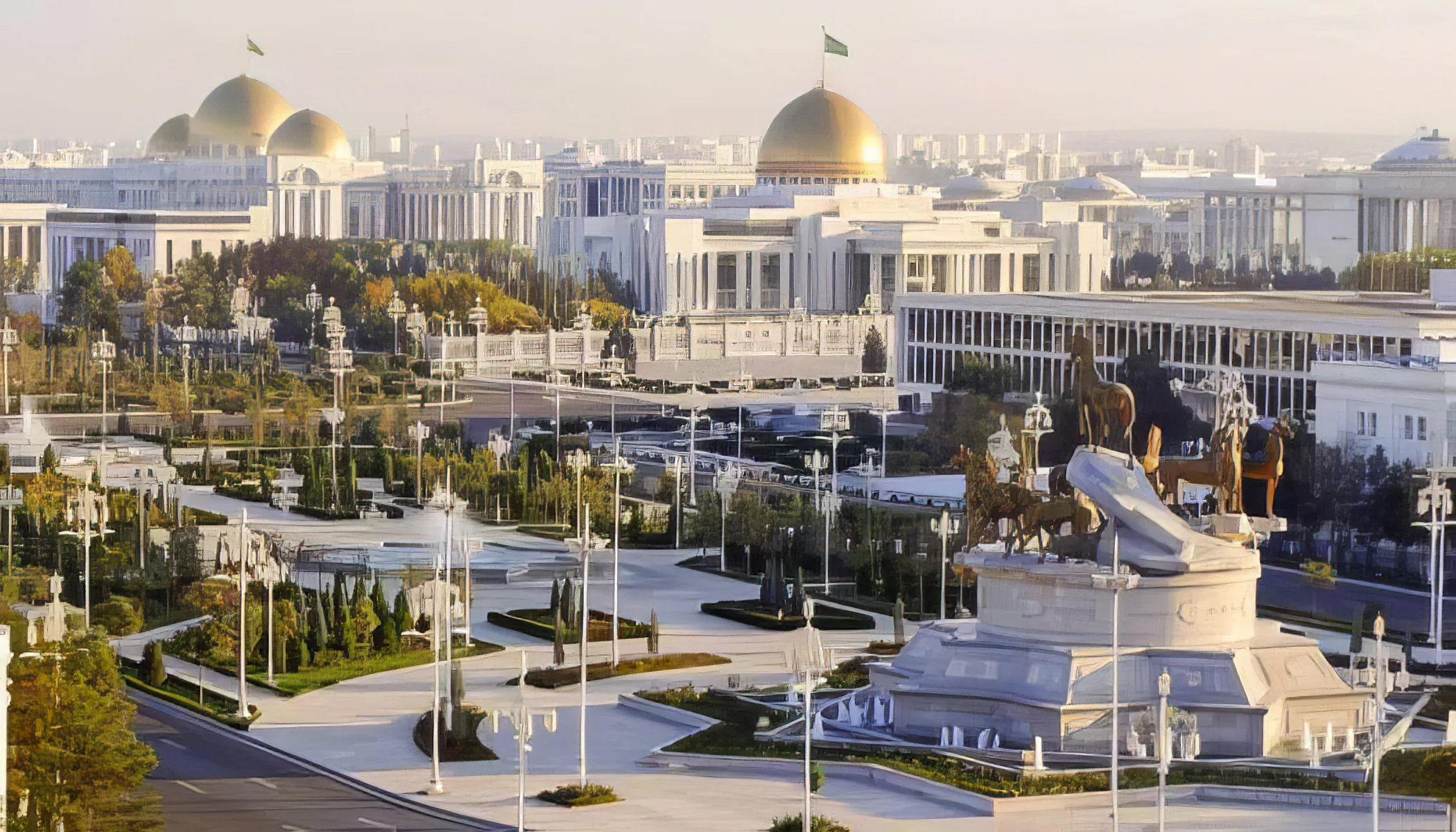
Discover Turkmenistan's unique blend of history and modernity through its captivating cities:
– Ashgabat: The capital city is known for its white marble buildings, grand monuments, and museums.
– Merv: An ancient city that provides UNESCO World Heritage archaeological sites with rich historical significance.
– Konye-Urgench: Famous for its ancient ruins, it provides insight into the medieval architecture of the region.
– Turkmenbashi: A coastal city on the Caspian Sea known for its beaches and Awaza tourist zone.
– Dashoguz: Gateway to many historical sites including the nearby ancient city of Kunya-Urgench.
– Mary: Provides a glimpse into Turkmen culture and serves as a base to visit the ancient site of Merv.
– Balkanabat: Known for its proximity to the beautiful Yangykala Canyon and natural landscapes.
Monuments
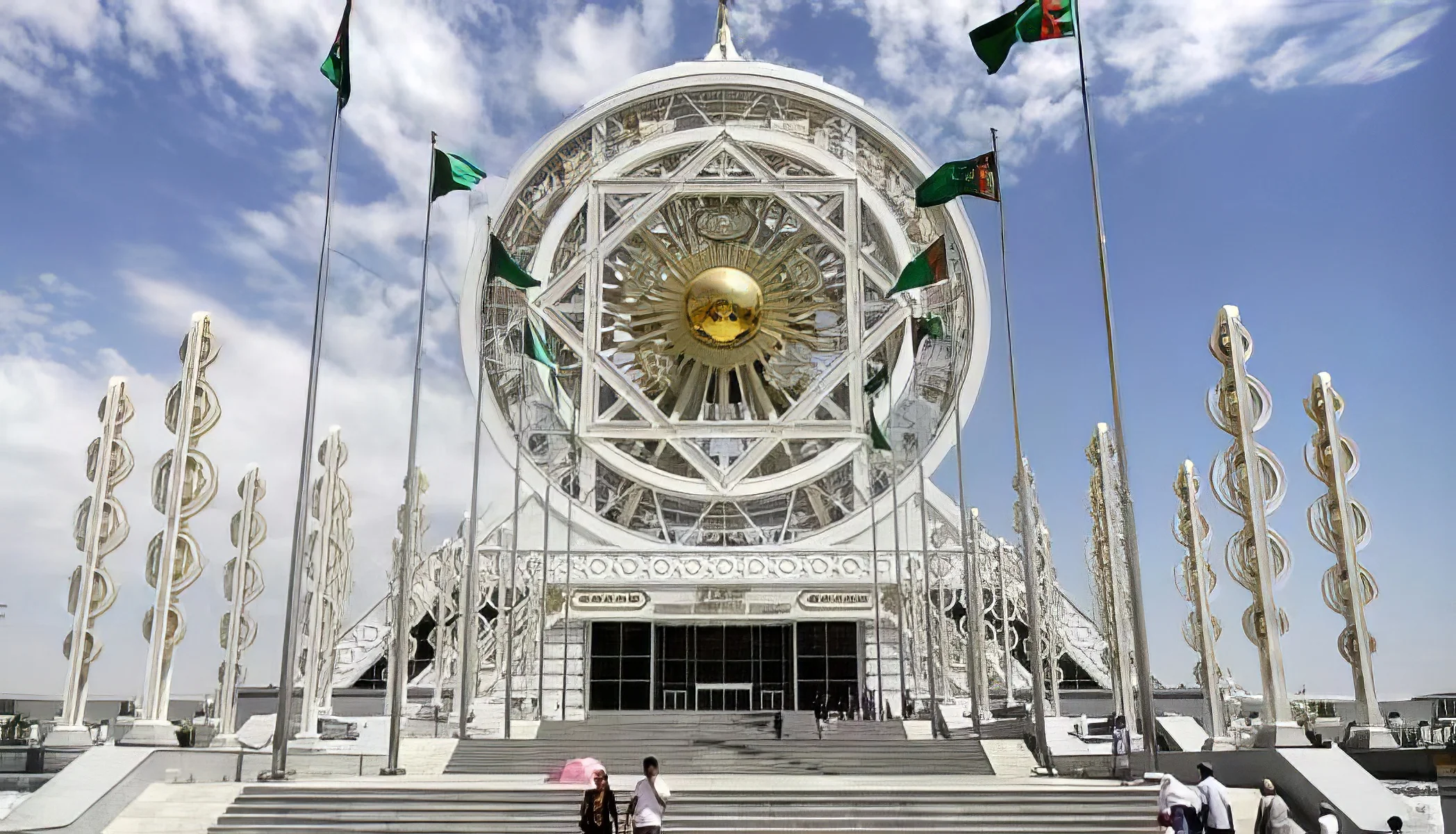
Turkmenistan boasts several remarkable monuments to explore:
– Ancient City of Merv: UNESCO site, once a major Silk Road city with impressive ruins.
– Kunya-Urgench: Historical capital of Khorezm with monuments like the Kutlug Timur Minaret.
– Ashgabat's Monument of Neutrality: Large revolving statue symbolizing Turkmenistan's neutrality policy.
– Nisa, near Ashgabat: Parthian Empire ruins with ancient fortress remains and UNESCO recognition.
– Darvaza Gas Crater: Known as "Door to Hell," a continuously burning natural gas field.
– Mausoleum of Sultan Sanjar in Merv: A grand burial site for the last Seljuk Empire ruler.
– Arch of Independence, Ashgabat: Monument celebrating Turkmenistan's independence with a gold statue on top.
– Geok Tepe Mosque: Built to commemorate the 1881 battle at Geok Tepe fort.
Natural wonder
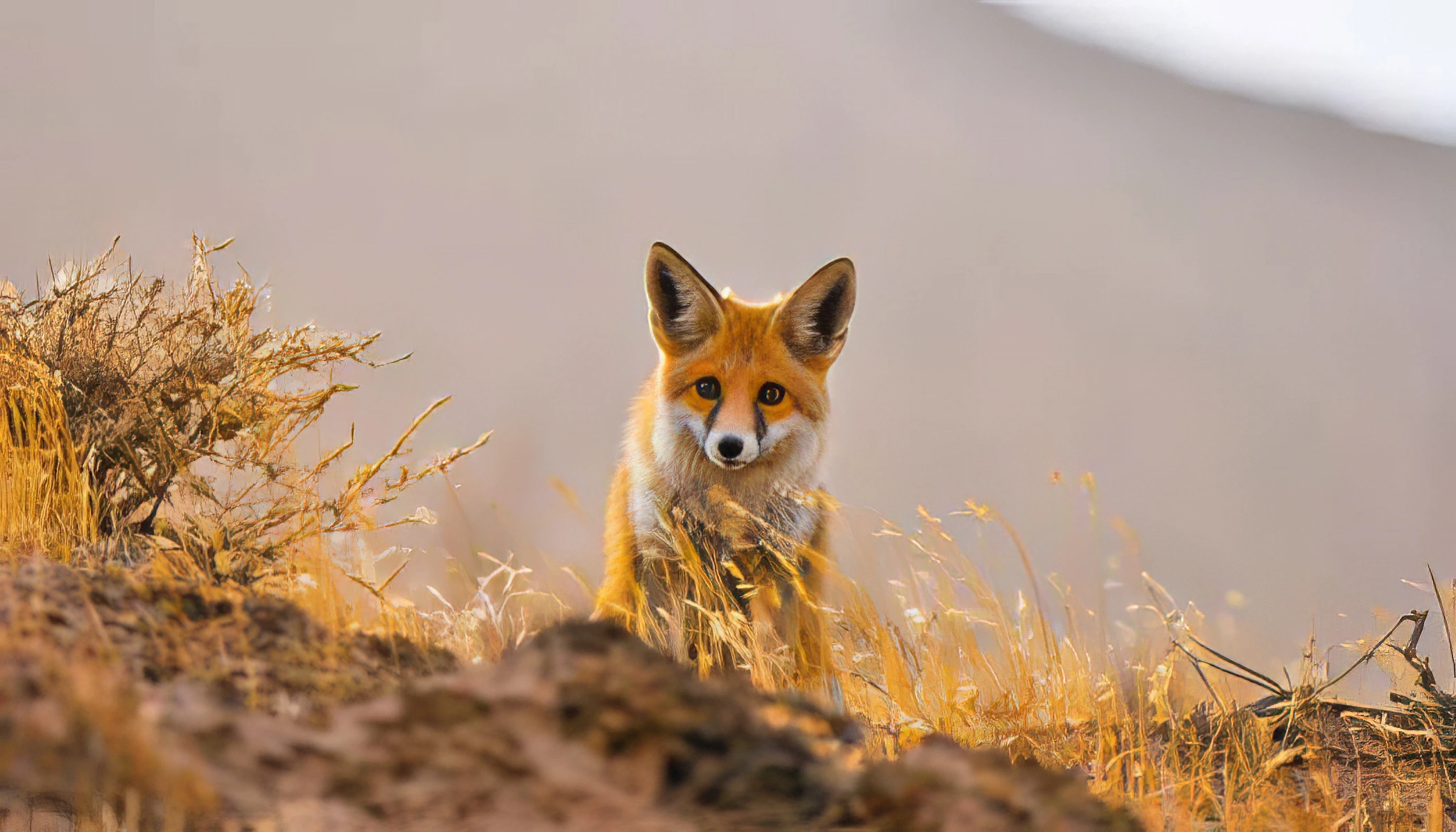
Explore Turkmenistan's unique natural landscapes:
– Darvaza Gas Crater: Known as the "Door to Hell," this fiery crater has burned continuously for decades.
– Yangykala Canyon: Features nice multi-colored rock formations shaped by erosion over millennia.
– Kow Ata Underground Lake: A thermal spring lake located in a vast underground cave system.
– Kugitangtau Mountains: Home to dinosaur footprints and diverse plant and animal life.
– Karakum Desert: Vast desert known for its dunes, sparsely populated areas, and unique wildlife.
– Repetek Biosphere State Reserve: Protects desert wildlife, including several endangered species and diverse flora.
– Köýtendag Nature Reserve: Rich in biodiversity, with caves, waterfalls, and endemic species like the Kopetdag mountain goat.
– Caspian Sea Coastline: Features unique coastal landscapes with salt marshes and lagoons.
– Sarygamysh Lake: A large freshwater lake providing habitat for migratory birds and aquatic life.
– Sumbar Valley: Provides fertile lands with a mix of mountainous terrain and valleys.
Outdoor activities
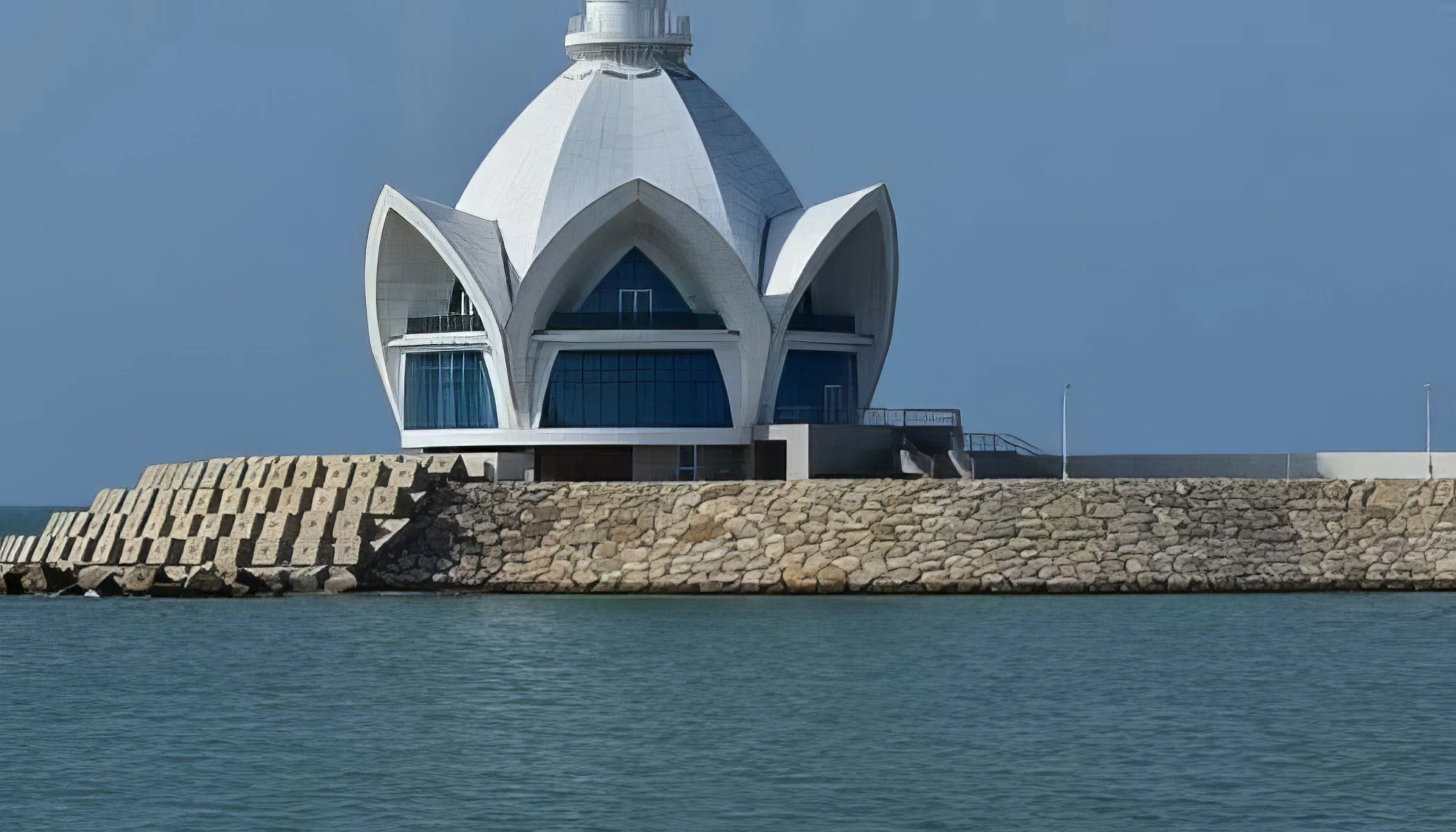
There are unique outdoor experiences awaiting visitors seeking adventure:
– Explore the Karakum Desert: Experience vast dunes and stark landscapes on a guided tour.
– Visit the Darvaza Gas Crater: Witness the "Door to Hell," a fiery natural gas pit burning for decades.
– Trek in Köýtendag Nature Reserve: Discover caves, waterfalls, and diverse wildlife in this mountainous region.
– Camel Safari in Nokhur Village: Travel like locals through charismatic surroundings on camelback.
– Hike around Yangykala Canyon: Marvel at colorful rock formations resembling a miniature Grand Canyon.
– Birdwatching at Sarygamysh Lake: Spot various bird species in this remote and laid-back location.
– Horseback Riding near Ashgabat: Experience the traditional Akhal-Teke horses in their native environment.
Kid Friendly

Turkmenistan supplies unique experiences for families visiting with children:
– Akhal-Teke Horse Farm: Visit these beautiful horses known for their speed and elegance.
– Ashgabat Zoo: Explore a variety of animal species, ideal for a family day out.
– Turkmenbashi Seaside Resort: Relax by the Caspian Sea with beach activities suitable for kids.
– Independence Park: Enjoy open spaces and monuments in this family-friendly park.
– Kopet Dag Mountains: Perfect for hiking and picnicking with scenic views.
– Gypjak Mosque: A cultural site with impressive architecture that can fascinate children.
– Ashgabat Ferris Wheel: Ride one of the world's largest indoor Ferris wheels, offering great city views.
– Geok Depe Museum: Learn about local history at a museum featuring interactive exhibits for kids.
Cuisine
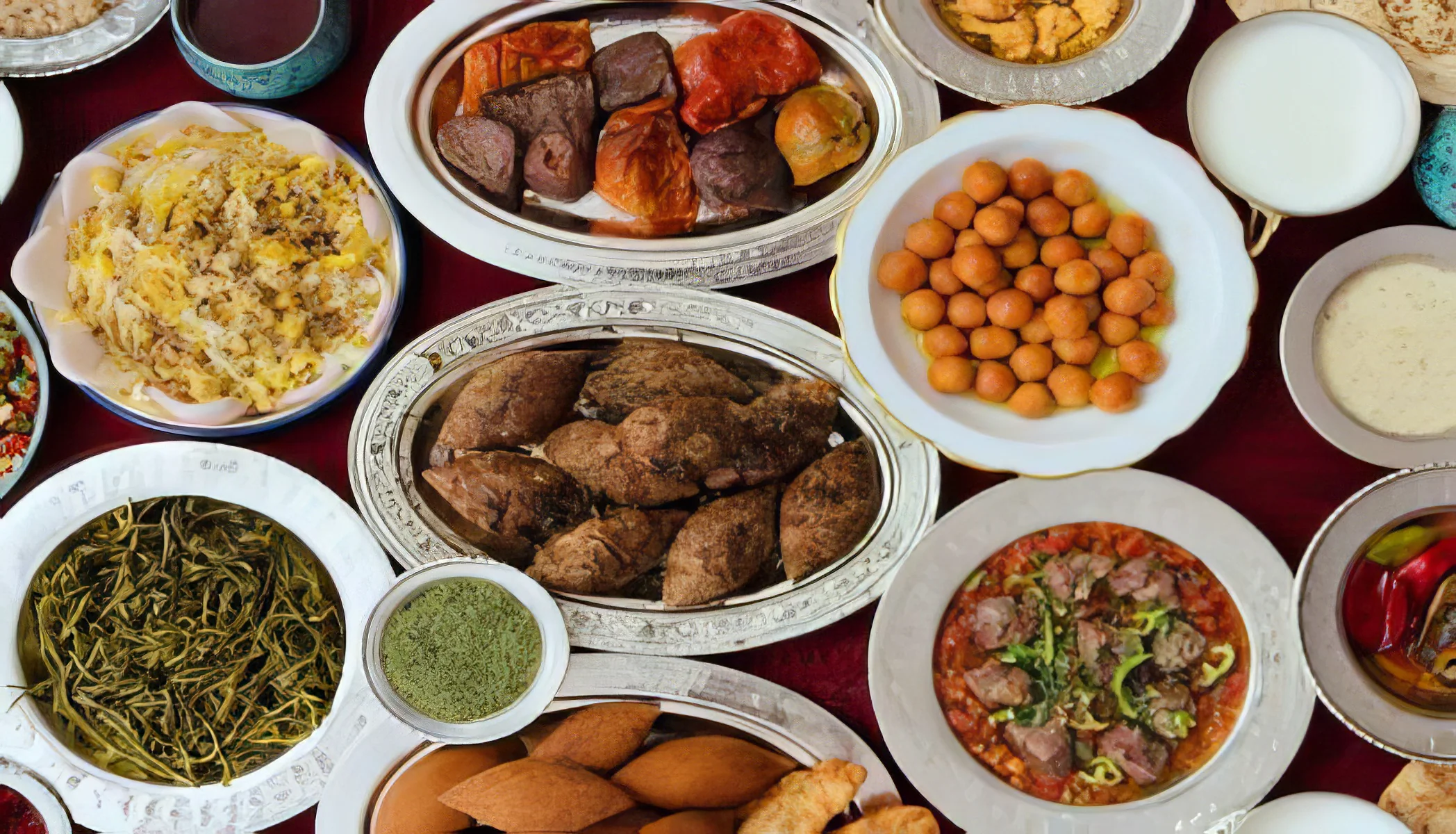
Turkmenistan's cuisine is influenced by its nomadic heritage and Central Asian neighbors, featuring hearty and simple dishes. Meals often include meat, rice, and bread as staples. Cooking relies on natural flavors and traditional methods like grilling and stewing. – Plov: Rice dish cooked with lamb or beef, carrots, onions, and spices.
– Ichlekli: Savory pie filled with minced meat, onions, and spices.
– Shashlik: Skewered and grilled chunks of marinated meat.
– Manti: Steamed dumplings filled with spiced lamb or beef.
– Gok Chuchvara: Spinach-filled dumplings served with yogurt or sauce.
– Pishme: Fried dough balls often enjoyed as a snack.
Souvenir

Turkmenistan provides unique souvenirs that reflect its rich cultural heritage. Here are some popular items to consider:
– Turkmen Carpets: Known for their intricate designs and craftsmanship, they are a prized souvenir.
– Alabaster Items: Locally sourced alabaster is used to create beautiful decorative pieces.
– Traditional Jewelry: Silver jewelry with unique Turkmen designs is popular among visitors.
– Embroidered Textiles: Colorful embroideries on clothing and accessories showcase local craftsmanship.
– Felt Products: Handmade felt items include carpets, hats, and decorative pieces.
– Ceramics: Beautifully crafted ceramics reflect traditional patterns and techniques.
– Yurt Models: Miniature yurts make for unique and culturally significant souvenirs.
Traditional Shows

Turkmenistan supplies unique traditional performances:
– Bakhshi Music: Experience the epic storytelling and oral traditions of Turkmenistan through Bakhshi singers, who perform with dutars in cultural festivals.
– Kushtdepdi Dance: Witness this energetic and rhythmic dance, featuring synchronized movements and traditional costumes, typically performed at weddings and celebrations.
– Turkmen Carpet Weaving Demonstrations: Observe artisans craft sophisticated patterns using age-old techniques at various cultural exhibitions across the country.
– Dutar Performances: Enjoy the soothing melodies of the dutar, a two-stringed instrument central to Turkmen music, performed by skilled musicians in local concerts.
– Traditional Akhal-Teke Horse Shows: Watch the grace and beauty of the Akhal-Teke horses during special events showcasing equestrian skills and traditional horsemanship.
Events & Festivals
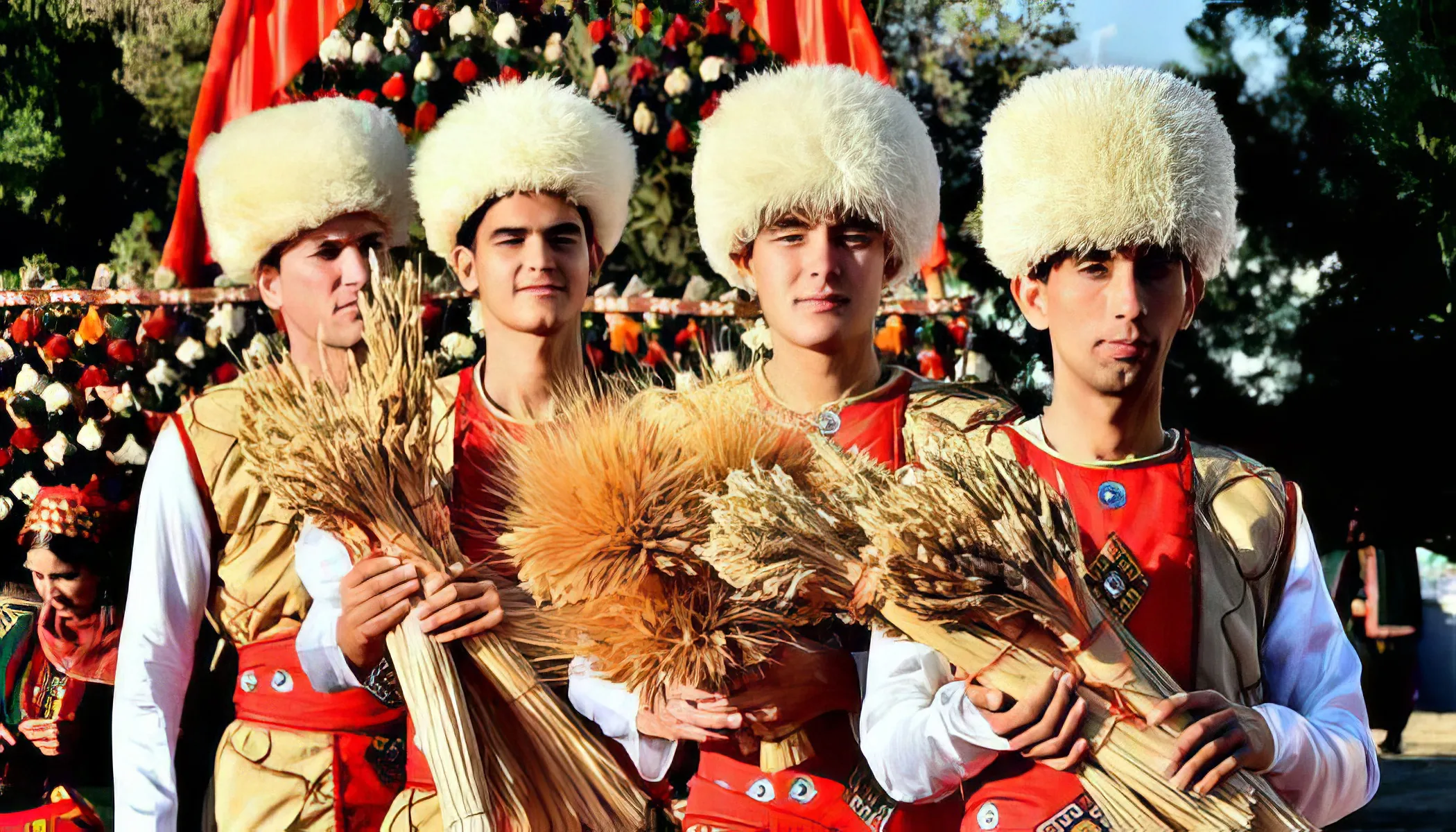
Turkmenistan's events and festivals reflect its cultural heritage and national pride:
– Nowruz Bayram: March celebration marking the Persian New Year with traditional music, dance, and food.
– Turkmen Horse Day: Held in April, honoring the Akhal-Teke horse with races and beauty contests.
– National Melon Day: Celebrated on the second Sunday of August, showcasing Turkmen melons with tastings and exhibitions.
– Independence Day: September 27 features parades, concerts, and fireworks marking Turkmenistan's independence from the Soviet Union.
– Neutrality Day: December 12 observes the country's neutral status with public events and ceremonies.
– Carpet Day: Celebrated annually to honor Turkmen craftsmanship with exhibitions and sales of handmade carpets.
– Harvest Festival: Takes place in autumn, celebrating agricultural abundance with fairs and folk performances.
Famous People

Turkmenistan has a rich history of influential figures spanning various fields such as politics and culture.
– Saparmurat Niyazov (1940 to 2006, Gypjak): First President of Turkmenistan, known for his autocratic rule and extensive cult of personality.
– Gurbanguly Berdimuhamedow (born 1957, Babarap): Second President of Turkmenistan, recognized for modernizing infrastructure and maintaining strict political control.
– Magtymguly Pyragy (1724 to 1807, Haji Qushan): Renowned poet and philosopher, celebrated for his contributions to Turkmen literature and nationalist sentiment.
– Annaguly Deryayev (1938 to 2022, Ashgabat): Prominent theater director noted for advancing Turkmen performing arts and cultural expression.
– Aman Kekilov (1912 to 1974, Ashgabat): Influential writer whose works are pivotal in Turkmen literature and educational reforms.
Books

These books provide insights into Turkmenistan's history, culture, and societal changes through compelling narratives and personal accounts.
– "The Tale of Aypi" by Ak Welsapar: Novel about the struggles between tradition and modernity in a Turkmen village.
– "The Caravans" by James A. Michener: Explores post-war Central Asia, including Turkmenistan, through a blend of fiction and historical fact.
– "The Black Gulf" by Caroline Eden: Examines the cultural and everyday life surrounding the Caspian Sea region, touching on Turkmenistan.
– "The Valley of the Giant Buddhas" by Andrew Lawler: Chronicles exploration around ancient trade routes linking Turkmenistan to broader histories.
– "Mud Sweeter than Honey" by Margo Rejmer: Offers stories from Central Asia under Soviet rule, including accounts from Turkmenistan.
Songs

These songs highlight the rich musical heritage and cultural pride of Turkmenistan, often featuring traditional instruments and themes.
– Turkmen Sahra: Celebrated folk song embodying Turkmen culture and landscapes.
– Gara Goz: Popular traditional song known for its heartfelt lyrics.
– Ey Dilden: Modern favorite featuring contemporary Turkmen rhythms and sounds.
– Ak Guwlar: Iconic piece celebrating youth and beauty in Turkmen music.
– Ahal Atlar: Tribute to the renowned Akhal-Teke horses of Turkmenistan.
Films

Discover the cinematic gems that explore the culture and landscapes of Turkmenistan:
– "The Daughter-in-Law": Khodjakuli Narliev's film depicts rural life and familial relationships in Soviet-era Turkmenistan.
– "Karakum": A German-Turkmen collaboration, this adventure film follows two boys navigating the vast Karakum Desert.
– "The Fall of Otrar": Kazakh director Ardak Amirkulov's historical epic includes scenes depicting ancient Turkmen landscapes and history.
– "Hojanepes": This drama centers around traditional values and modern dilemmas within a Turkmen family.
– "Amul-Hazar": A documentary exploring the Silk Road's historical significance through Turkmenistan's ancient cities.