

Travel Guide to Indonesia: Top Things to Do & Tips
This Southeast Asian archipelago is the world's largest island country, with over 17,000 islands. Known for its diverse culture, rich history, and remarkable landscapes, it offers a mix of turbulent cities, ancient temples, abundant rainforests, and beautiful beaches.
- Capital
- Jakarta
- Population
- 243 millions
- Superficy
- 1920000 sq.km
- Months to Visit
- May to Sept.
- Living Cost
- Economical
Overview
Indonesia is a Southeast Asian nation made up of thousands of volcanic islands, making it the world's largest archipelago. It's known for its diverse ethnic groups, languages, and cultures, with over 300 ethnic groups and more than 700 languages. The capital, Jakarta, is a lively metropolis, while Bali, another well-known region, offers beautiful beaches and vibrant nightlife. Indonesia is also home to a wide range of wildlife, including orangutans and Komodo dragons. The country's cuisine varies by region, with rice as a staple food, and is known for its rich flavors and spices. Despite its modern cities and thriving tourism, many parts of Indonesia retain traditional customs and lifestyles.
Pros & Cons
GOOD REASONS TO VISIT INDONESIA
– Diverse Landscapes: Indonesia offers rainforests, volcanoes, beaches, and underwater ecosystems across its 17,000 islands.
– Rich Cultural Heritage: Experience traditional dances, music, and art, particularly in Bali and Yogyakarta.
– Wildlife: Encounter unique species like orangutans, Komodo dragons, and diverse marine life.
– Historical Sites: Visit ancient temples like Borobudur and Prambanan, showcasing Indonesia's rich history.
– Indonesian Cuisine: Enjoy diverse, flavorful dishes like rendang, nasi goreng, and satay. CHALLENGES WHEN VISITING INDONESIA
– Infrastructure: Transportation can be challenging due to traffic congestion and less developed rural areas.
– Natural Disasters: Indonesia is prone to earthquakes, tsunamis, and volcanic eruptions.
– Air Quality: Big cities like Jakarta often suffer from air pollution, which may affect sensitive individuals.
Before Departure
Before setting off on your Indonesian adventure, there are several key points to consider:
– Passport: Ensure your passport is valid for at least six months from your arrival date.
– Visa: Most nationalities can get a 30-day visa on arrival, extendable for another 30 days. Some countries are exempt from visa requirements.
– Currency: The local currency is Indonesian Rupiah (IDR). Credit cards are widely accepted in cities, but cash is king in rural areas. ATMs are readily available.
– Internet access: WiFi is common in urban areas and tourist hotspots. For consistent connectivity, consider purchasing a local SIM card.
– Language barrier: Bahasa Indonesia is the official language. English is spoken in tourist areas and by younger generations. Other languages are not widely spoken.
What to Pack
When packing for a trip to Indonesia, it's important to consider the tropical climate, cultural customs, and the various activities you might engage in.
– Essentials: Passport and visa (if required), travel insurance details, flight tickets and itinerary, accommodation reservations.
– Clothing: Lightweight and breathable clothing, comfortable walking shoes, swimwear (for beach areas), hat and sunglasses for sun protection, a light jacket for cooler evenings.
– Health & Safety: Prescription medications and a basic first aid kit, insect repellent, sunscreen with high SPF, personal hygiene items.
– Electronics: Travel adapter for Indonesian outlets, mobile phone, camera, portable charger.
Weather
Indonesia experiences tropical climate with two distinct seasons: dry and wet.
– Dry Season (May to September): Less rainfall, lower humidity, and lots of sunshine across the country.
– Wet Season (October to April): Higher rainfall and humidity, especially in the afternoon and evening. The best time to visit Indonesia is during the dry season, particularly between May and September.
– Pros: Ideal for outdoor activities and exploring the islands.
– Cons: It's the peak tourist season, so expect higher prices and crowded tourist spots.
Travel Budget
Indonesia is known for its cost-effective travel options. Here are some average costs for reference:
– Hotel: 25$ to 100$
– Lunch: 2$ to 10$
– Beverage (in bar/restaurant): 2$ to 6$
– Coffee: 1$ to 3$
– Transportation: (train 1$ to 10$), (bus 0.5$ to 2$), (taxi /10km 3$ to 7$)
– Mobile data (per GB): 1$ to 2$
Language
Indonesian, or Bahasa Indonesia, is the official language of Indonesia and is relatively easy to learn due to its phonetic nature. Here are some useful phrases for tourists:
– Hello: Halo
– Thank you: Terima kasih
– Please: Tolong
– How much is this?: Berapa ini?
– Excuse me: Permisi
– I don't understand: Saya tidak mengerti
– Yes: Ya
– No: Tidak
– Goodbye: Selamat tinggal
History
Indonesia's history is marked by the influence of powerful external empires and rich trade networks. Hindu and Buddhist kingdoms flourished from the 7th to the 14th century, followed by Muslim traders who brought Islam. The Dutch East India Company controlled the spice trade in the 17th century, and by the 19th century, the Dutch had established colonial rule. During World War II, Japan occupied Indonesia, but the country declared independence in 1945. After a period of unrest and reform, Indonesia is now a democratic republic, though it still grapples with political and economic challenges.
Geopolitics
Indonesia is a democratic republic located in Southeast Asia and Oceania, consisting of thousands of islands. It shares land borders with Papua New Guinea, East Timor, and Malaysia, and maritime borders with Singapore, Vietnam, the Philippines, Australia, and the Indian territory of the Andaman and Nicobar Islands. Indonesia is a member of ASEAN and plays a significant role in the organization due to its size and strategic location. The country has a diverse range of relationships with global powers, including the United States, China, and Australia, balancing its economic and strategic interests. Indonesia's geopolitical challenges include managing its vast maritime territory, addressing domestic ethnic and religious tensions, and navigating its relationships with neighboring countries and major powers.
Sample Itinerary
This tour offers a blend of cultural immersion in Yogyakarta, natural beauty in Bali, wildlife in Komodo National Park, and historical sites in Jakarta.
– 2 days in Yogyakarta: Visit Borobudur and Prambanan Temples. Explore the Sultan's Palace and Taman Sari water castle.
– 3 days in Bali: Enjoy the beaches of Kuta and Seminyak. Visit Ubud's Monkey Forest and Tegalalang Rice Terrace.
– 2 days in Komodo National Park: Encounter Komodo dragons. Enjoy snorkeling and beach time on Pink Beach.
– 2 days in Jakarta: Explore the old town, National Monument, and Istiqlal Mosque. Visit the Jakarta History Museum and Sunda Kelapa Harbor.
Popular cities
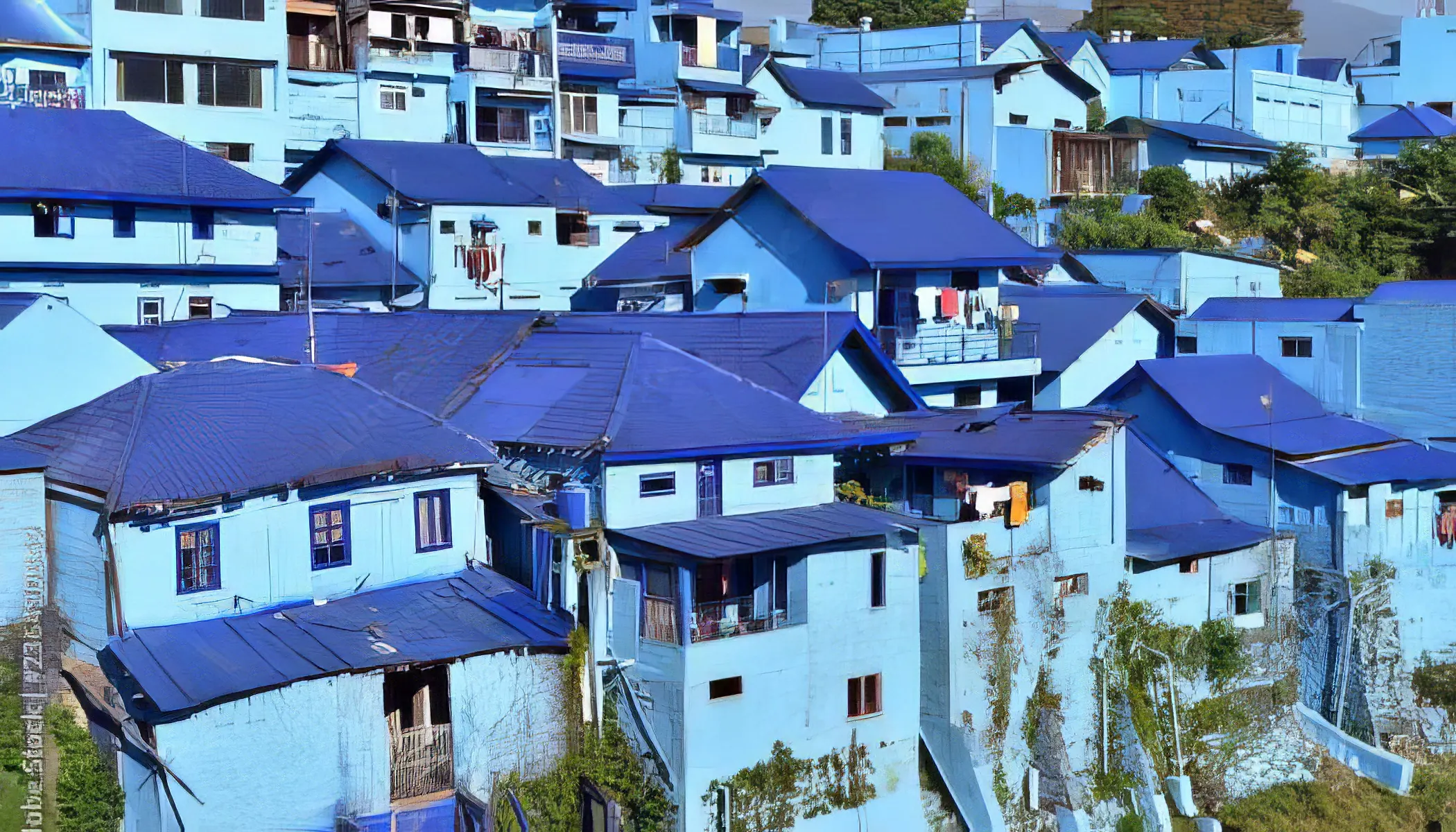
Indonesia offers a diverse range of cities, each with its unique charm and attractions:
– Jakarta: The capital city, a busy metropolis with a mix of modern and colonial architecture.
– Yogyakarta: Known for its traditional arts, cultural heritage, and proximity to the ancient temple of Borobudur.
– Bandung: Famous for its colonial architecture, tea plantations, and a thriving fashion scene.
– Surabaya: The second-largest city, offering historic Arab quarters, a animated Chinatown, and the Tugu Pahlawan monument.
– Bali: Not a city, but an island paradise known for its beaches, temples, and dynamic nightlife.
– Medan: The gateway to North Sumatra, with attractions like the Maimun Palace and the Great Mosque.
– Makassar: Known for its historic Fort Rotterdam, Losari Beach, and the Trans Studio theme park.
Monuments
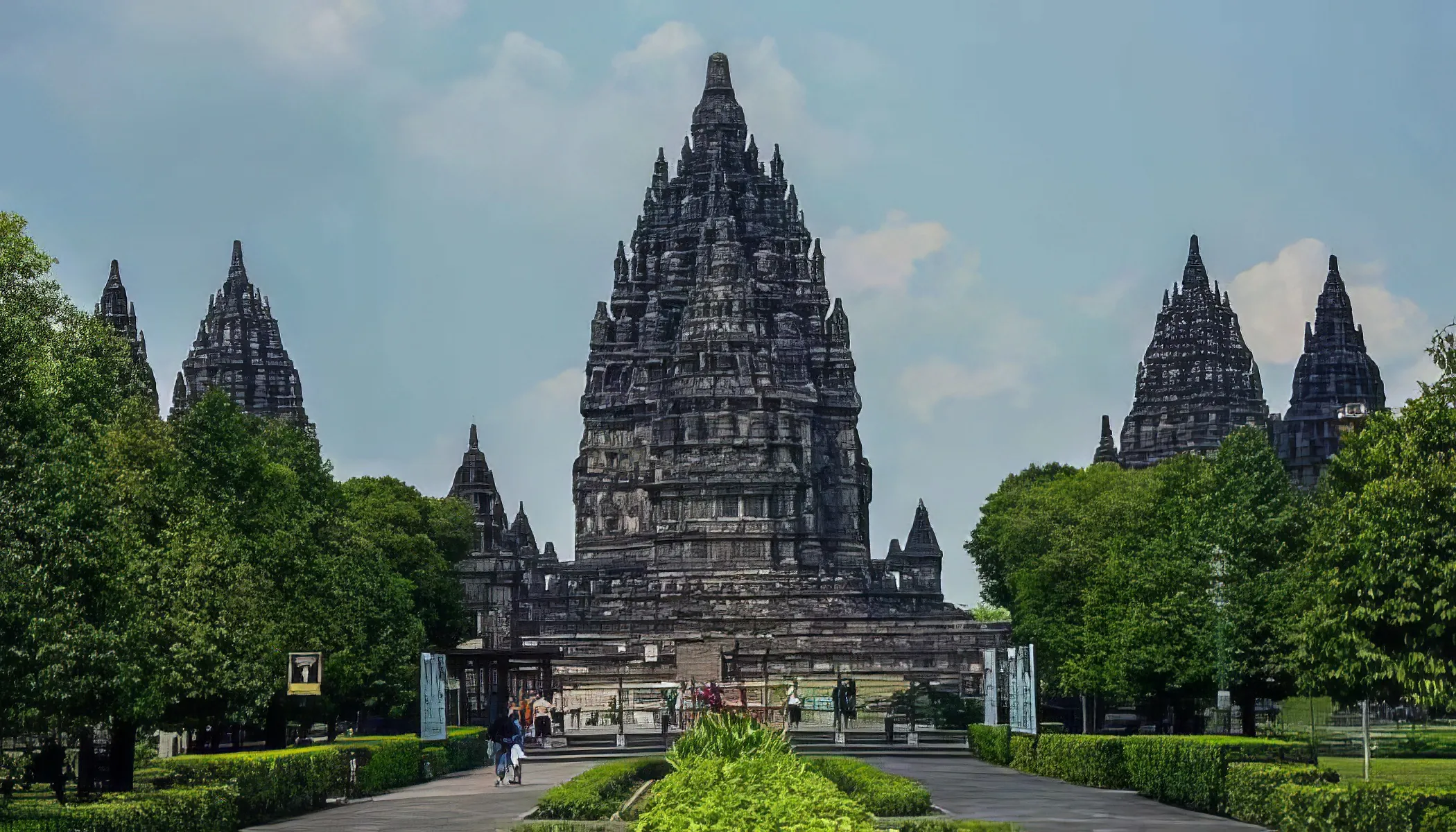
Indonesia is home to a variety of historical and architectural monuments:
– Borobudur Temple, Central Java: The world's largest Buddhist temple, featuring sophisticated stone carvings.
– Prambanan Temple, Yogyakarta: A UNESCO-listed Hindu temple complex with tall, pointed architecture.
– Uluwatu Temple, Bali: A cliff-top temple offering panoramic views of the Indian Ocean.
– Taman Sari, Yogyakarta: A former royal garden of the Sultanate of Yogyakarta, featuring baths and pools.
– Ratu Boko, Yogyakarta: An archaeological site with remnants of palaces, temples, and a bathing place.
– Tanah Lot, Bali: A popular sea temple perched on a rock formation off the Indonesian island of Bali.
– Baiturrahman Grand Mosque, Aceh: A symbol of Indonesian resilience and faith, rebuilt after the 2004 tsunami.
– Jakarta Cathedral, Jakarta: A neo-gothic cathedral, a testament to Indonesia's religious diversity.
Natural wonder
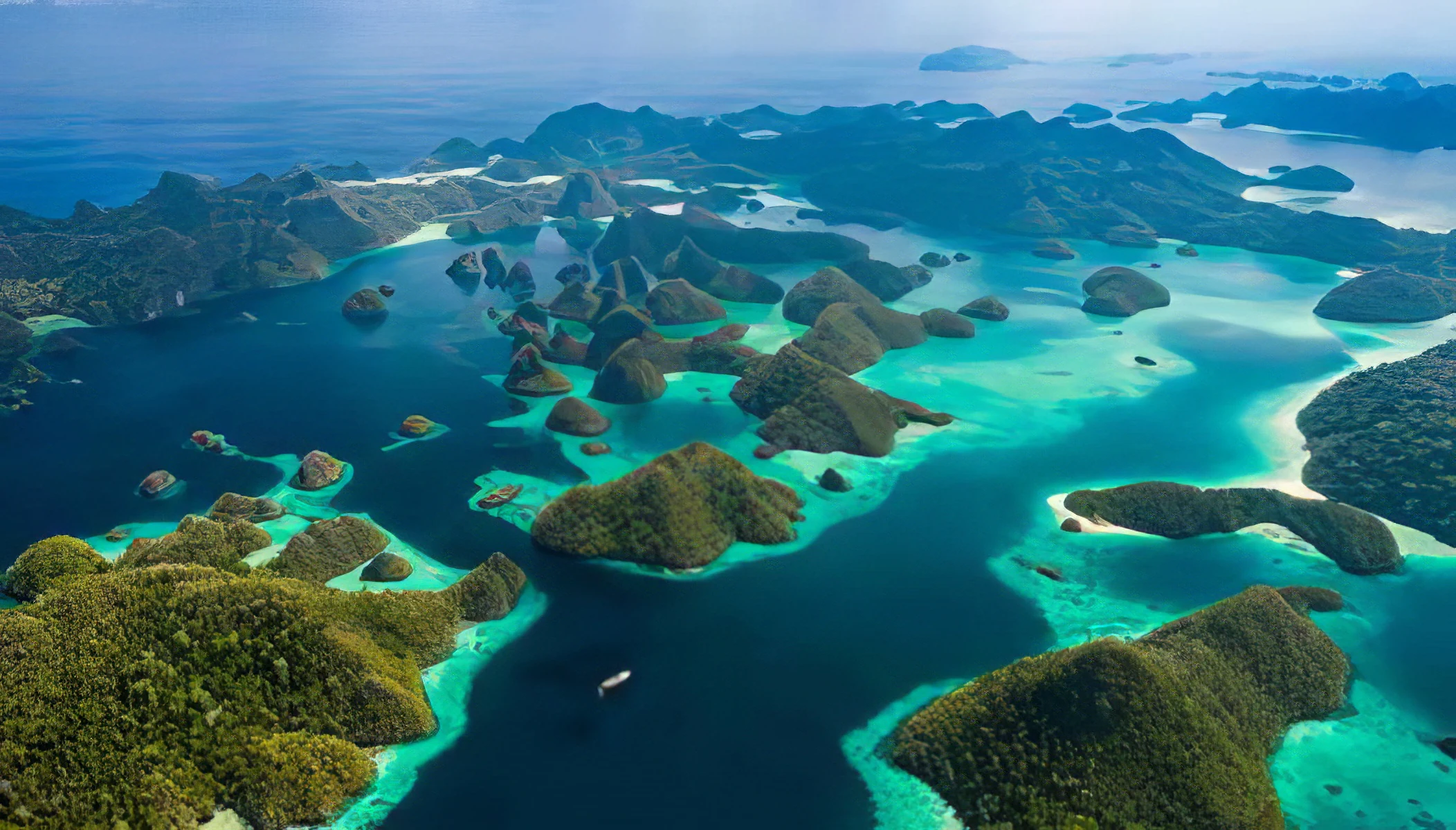
Explore the diverse natural wonders of Indonesia:
– Mount Bromo: An active volcano known for its remarkable sunrises and vast sand sea.
– Komodo National Park: Home to the world's largest lizard, the Komodo dragon.
– Lake Toba: The world's largest volcanic lake offering a calm atmosphere.
– Raja Ampat Islands: Known for its remarkable underwater biodiversity and coral reefs.
– Mount Rinjani: An active volcano on Lombok Island with a crater lake.
– Tanjung Puting National Park: Famous for its orangutan conservation.
– Kawah Ijen: Volcanic complex known for its blue fire phenomenon and sulfur mining.
– Baliem Valley: Offers a glimpse into the lives of the indigenous Dani people.
– Bunaken National Park: Marine park with some of the highest levels of biodiversity in the world.
– Toraja Land: Known for its unique culture and remarkable landscapes.
Beaches
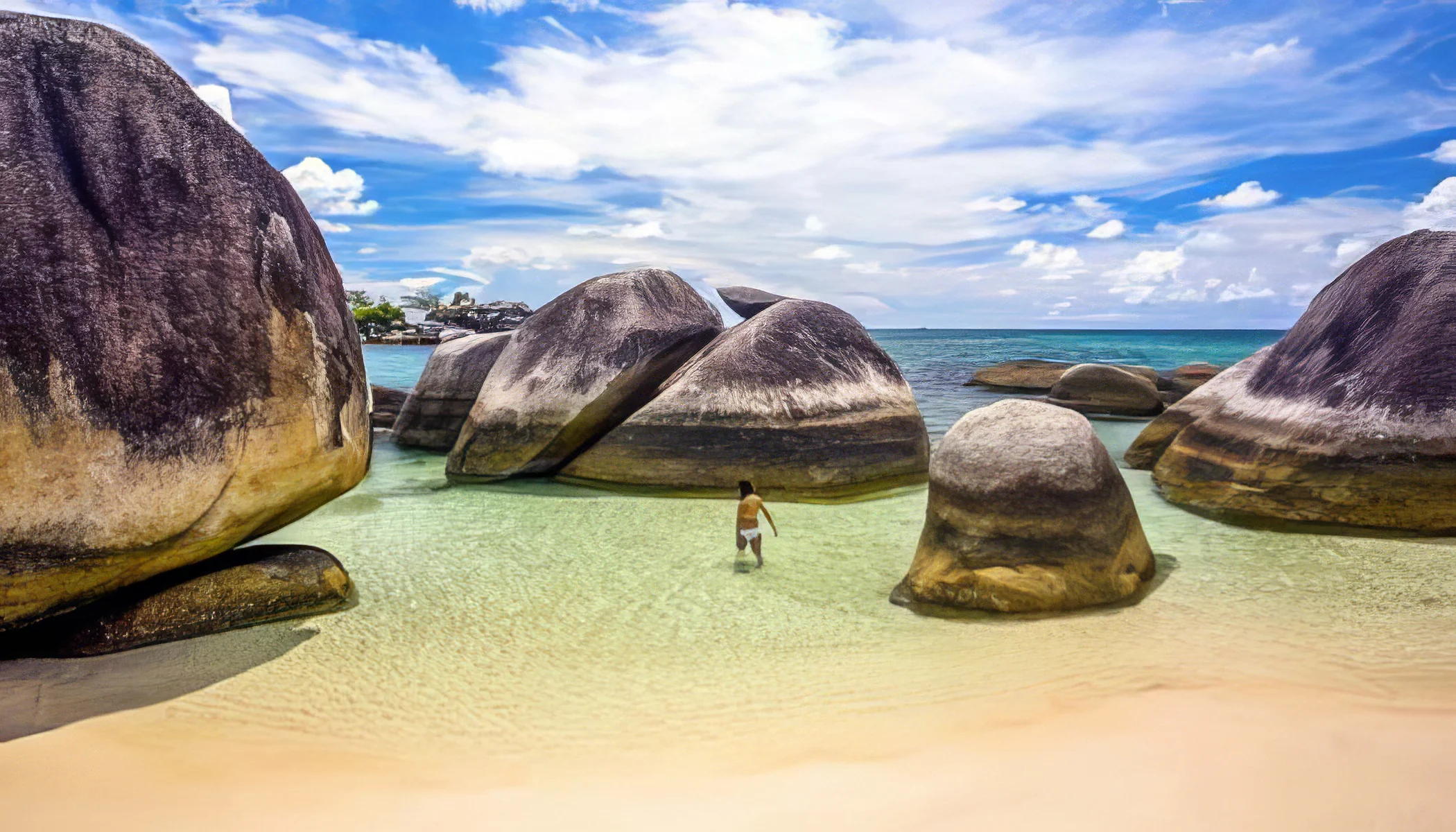
Indonesia is known for its beautiful beaches. Here are some of the most popular ones:
– Kuta Beach: Famous for its surfing waves and beautiful nightlife in Bali.
– Gili Trawangan Beach: Known for its clear waters, coral reefs, and relaxed atmosphere.
– Pink Beach: Unique for its pink sand, located in Komodo National Park.
– Nusa Dua Beach: Offers luxury resorts and calm waters in Bali.
– Senggigi Beach: Popular for its sunset views and nearby traditional village in Lombok.
– Sanur Beach: Known for its calm waters and long stretch of sand in Bali.
– Bunaken Beach: Famous for its marine national park and diving spots in North Sulawesi.
Outdoor activities

Indonesia offers a variety of outdoor experiences for nature and adventure enthusiasts:
– Trekking Mount Rinjani: Conquer the second highest volcano in Indonesia.
– Diving in Raja Ampat: Explore one of the richest marine biodiversity in the world.
– Surfing in Bali: Catch world-class waves on the island's famous beaches.
– Wildlife spotting in Borneo: Encounter orangutans in their natural habitat.
– Exploring Komodo National Park: Meet the world's largest lizards, the Komodo dragons.
– White water rafting in Ubud: Experience thrilling rapids amidst dense landscapes.
– Snorkeling in Gili Islands: Discover lively coral reefs and a variety of sea life.
Kid Friendly
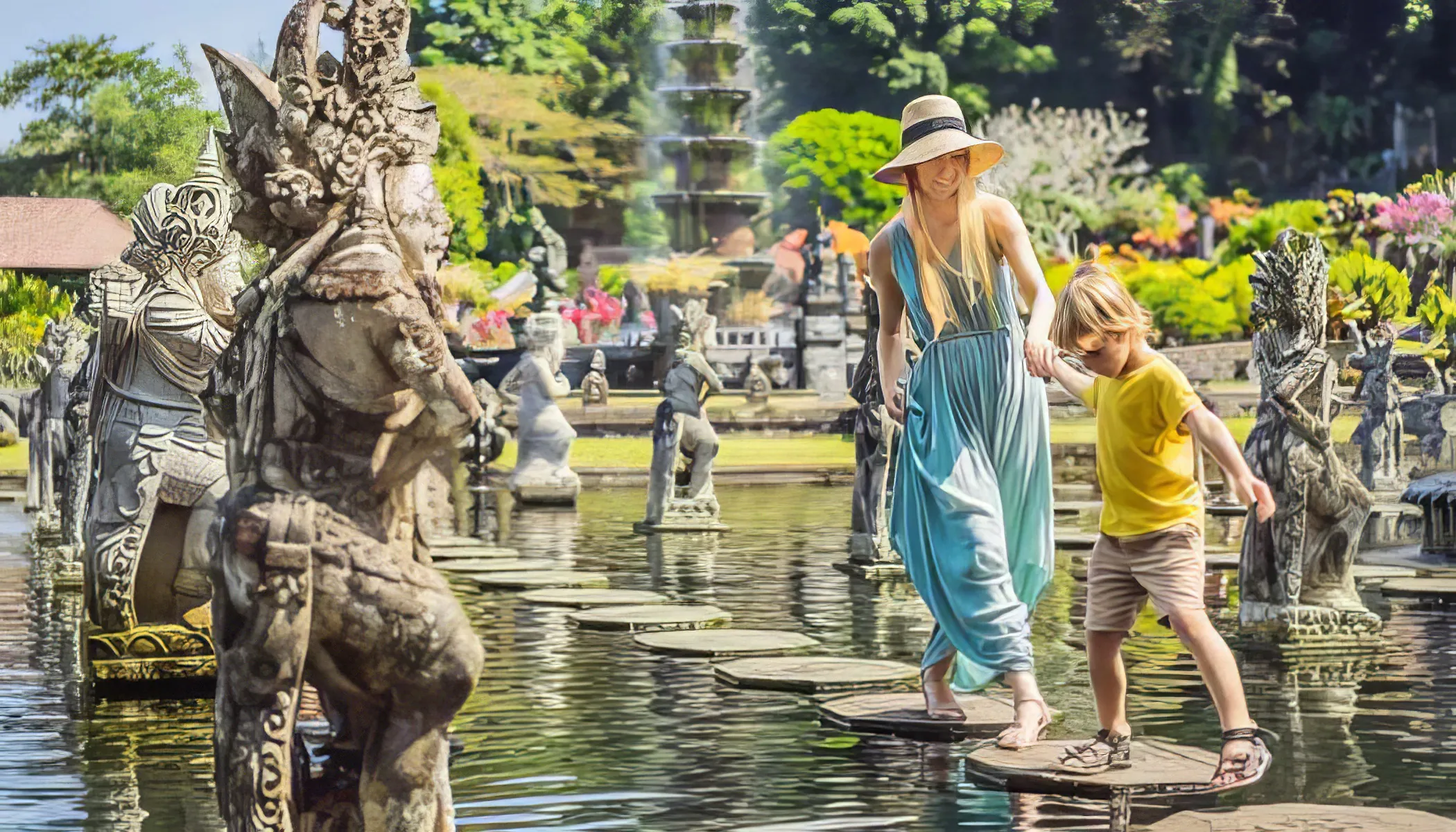
Indonesia offers a variety of activities that are perfect for families with children:
– Taman Mini Indonesia Indah: A cultural park showcasing Indonesian heritage with museums and gardens.
– Ragunan Zoo: A large zoo in Jakarta housing a variety of local and exotic animals.
– Waterbom Bali: A high-quality water park with a range of slides and pools.
– Komodo National Park: A chance to see the famous Komodo dragons in their natural habitat.
– Bali Safari and Marine Park: A wildlife conservation park with a variety of animals and marine life.
– Dunia Fantasi: An amusement park in Jakarta with a variety of rides suitable for all ages.
– SeaWorld Ancol: An oceanarium showcasing a variety of marine life, located in Jakarta.
– Taman Safari Bogor: A drive-through safari park located in Bogor, West Java.
Cuisine
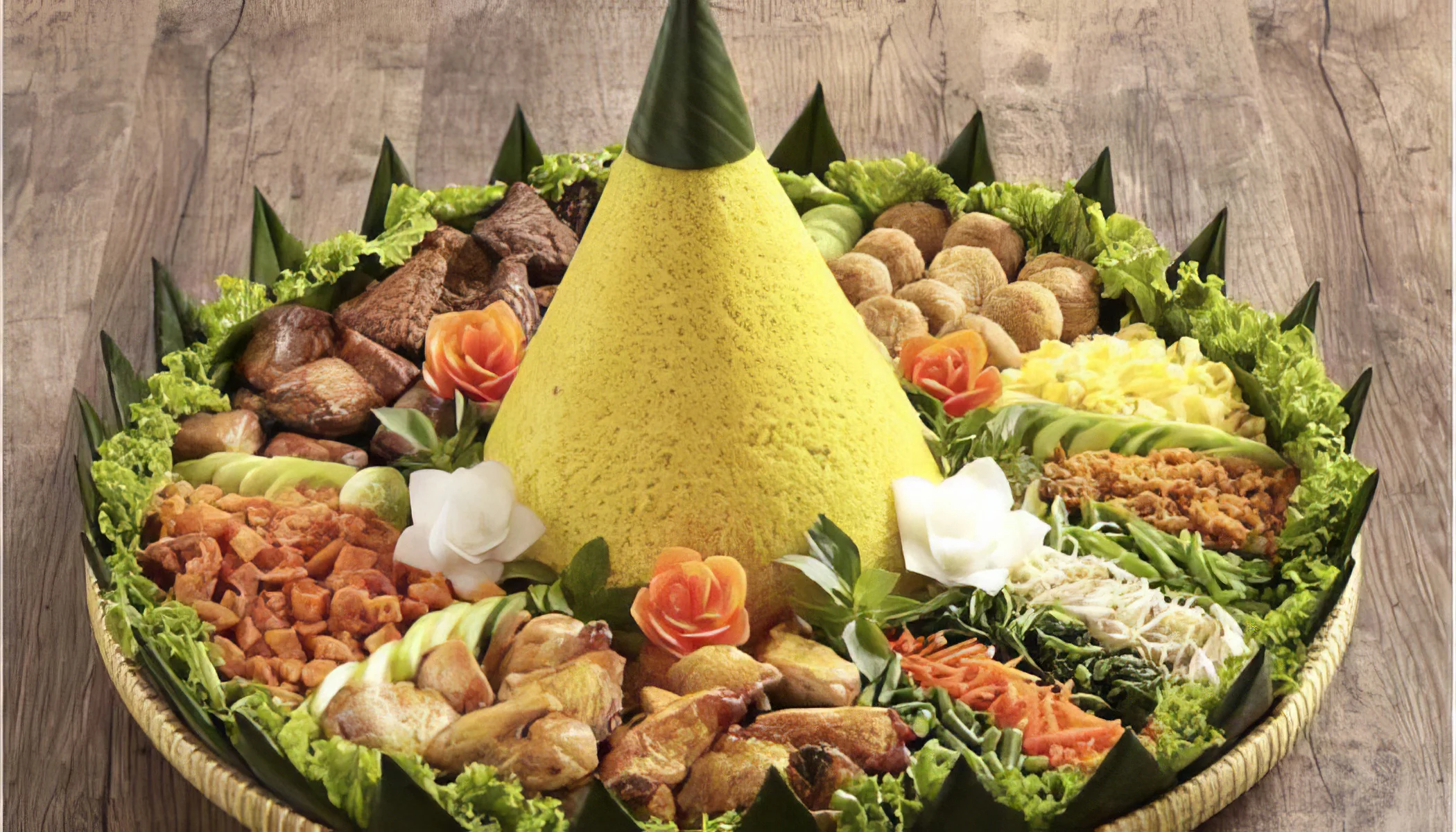
Indonesian cuisine is a pretty mix of local ingredients, traditional cooking methods, and diverse cultural influences. It offers a wide range of flavors, from spicy to sweet, with street food being a significant part of the food scene. Here are some of the most famous Indonesian dishes:
– Nasi Goreng: Indonesian fried rice with meat and vegetables, often served with a fried egg.
– Satay: Skewered and grilled meat served with peanut sauce.
– Rendang: Slow-cooked beef in coconut milk and spices.
– Gado-Gado: Mixed vegetable salad with peanut sauce.
– Bakso: Meatball soup with noodles and vegetables.
– Martabak Manis: Sweet pancake filled with chocolate, cheese, or peanuts.
Souvenir
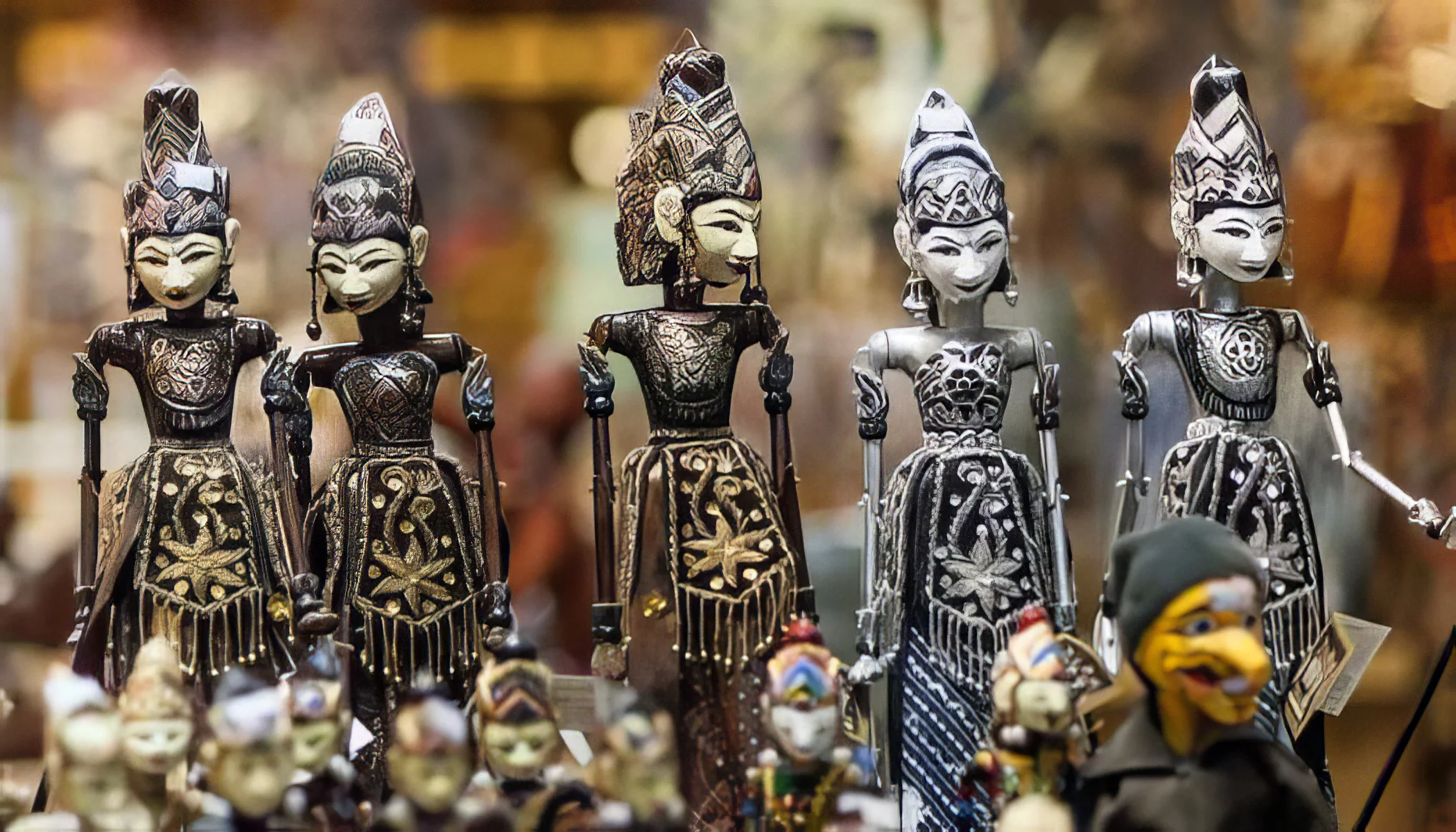
Indonesia is a country rich in culture and tradition, which is reflected in its wide range of unique souvenirs. Here are some items you might want to consider:
– Batik: Traditional Indonesian cloth that has been hand-dyed using a wax-resist technique.
– Wayang Puppets: Traditional Indonesian shadow puppets made from buffalo hide.
– Kopi Luwak: One of the world's most expensive and low-production varieties of coffee.
– Silver Jewelry: Particularly from the region of Yogyakarta, known for its fine silver craftsmanship.
– Wooden Carvings: Beautiful carvings, often of religious or mythical figures, are a popular souvenir.
– Traditional Masks: These are used in many cultural ceremonies and make for unique wall decorations.
– Indonesian Spices: Indonesia is famous for its spices, which are used in many traditional dishes.
Traditional Shows
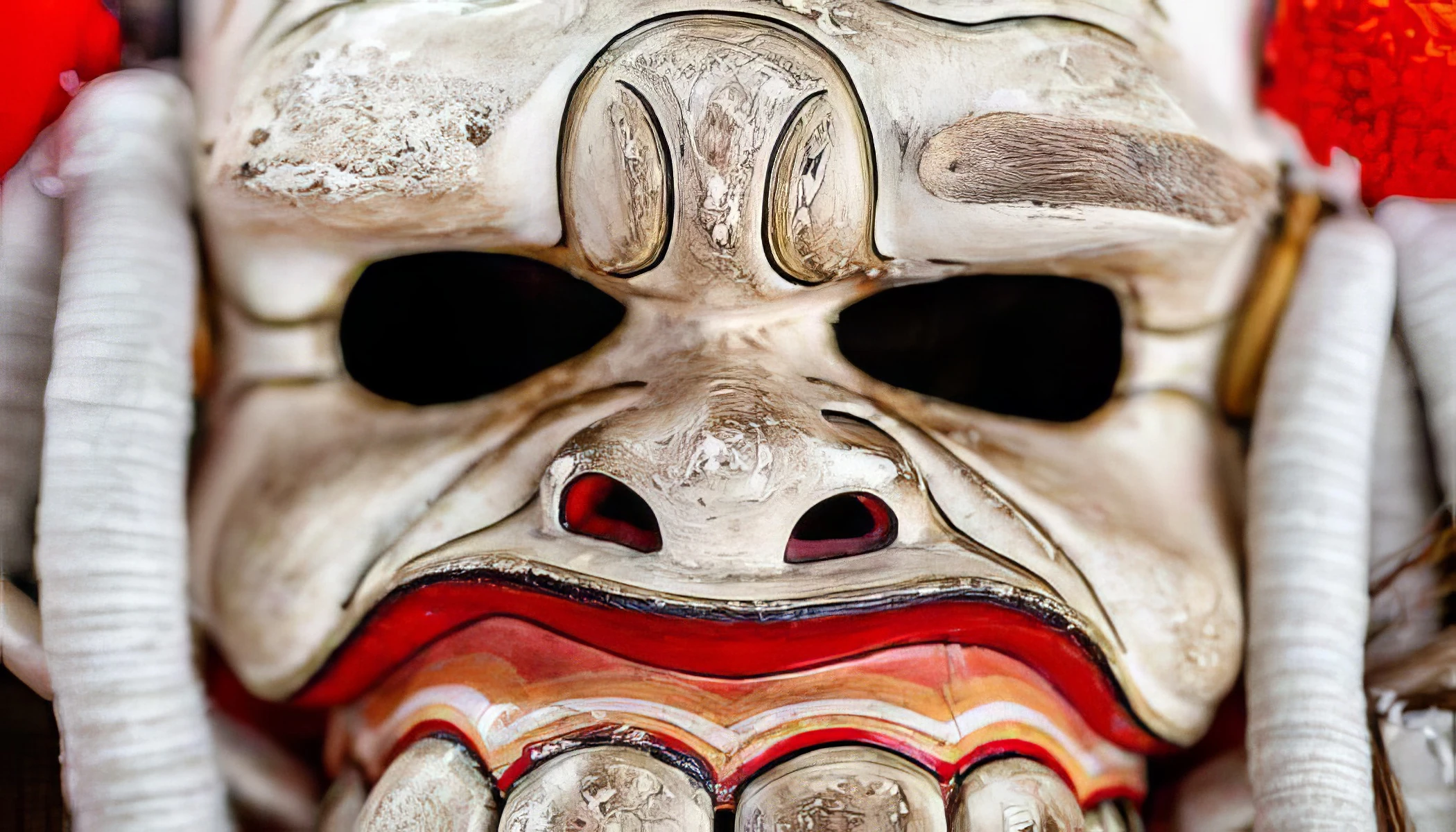
Indonesia is rich in traditional music and art performances:
– Wayang Puppet Theatre: This UNESCO-recognized shadow puppet show, often accompanied by gamelan music, can be seen in Yogyakarta.
– Kecak Dance: Witness this unique Balinese dance-drama, performed by a circle of 100 men, in Ubud.
– Angklung Performance: Enjoy this traditional music from West Java, played on bamboo instruments, in Bandung.
– Saman Dance: Experience this "dance of a thousand hands" from Aceh, known for its fast-paced rhythm and harmony.
– Gamelan Concert: Listen to this traditional ensemble music, typically made up of percussive instruments, in Bali.
Events & Festivals
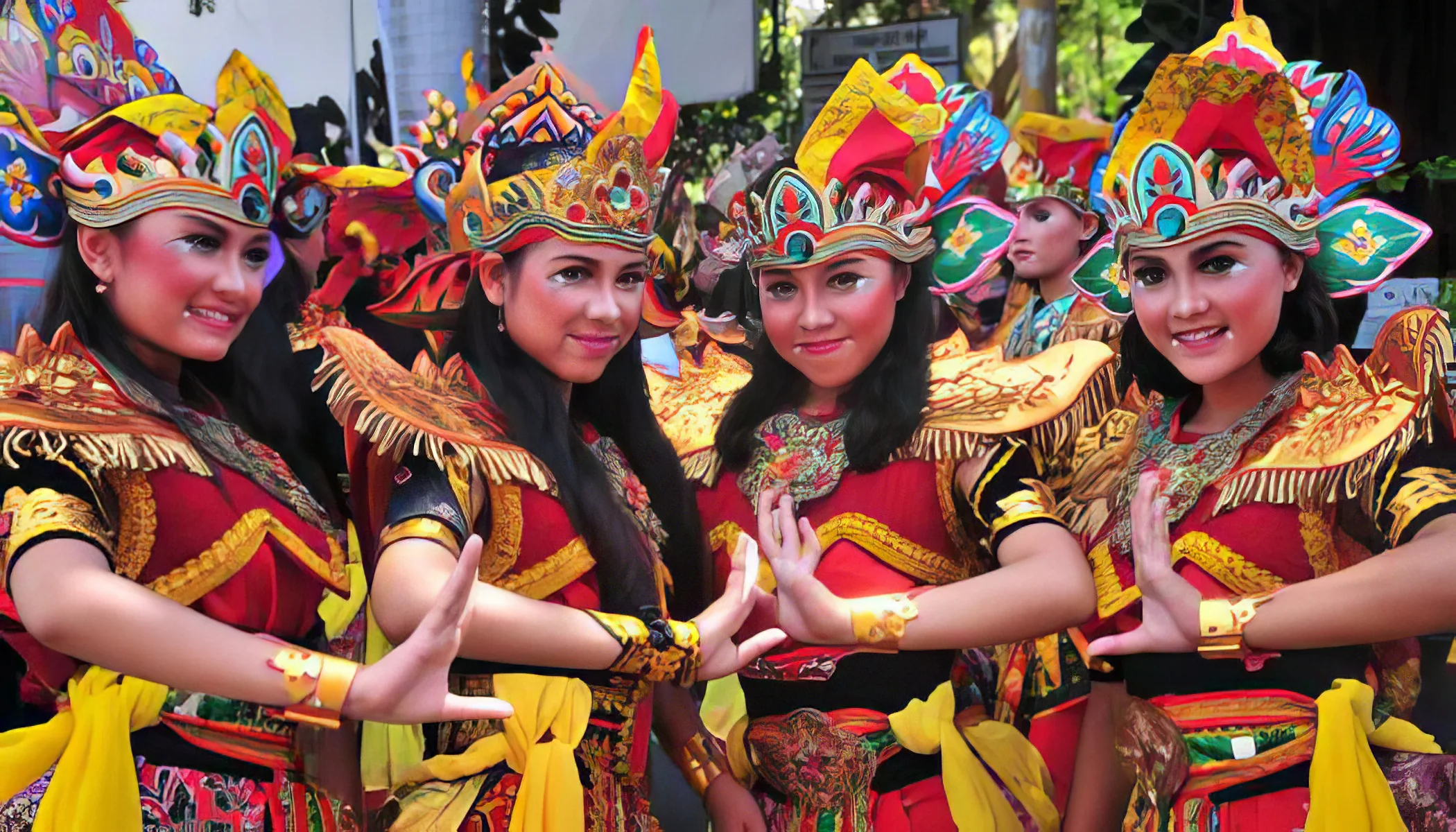
Indonesia, a country rich in culture, hosts several significant events and festivals each year:
– Cap Go Meh: Celebrated 15 days after Chinese New Year, it's a cultural event with parades and performances.
– Nyepi: A Hindu Day of Silence observed in March, with rituals and a day of quiet reflection.
– Waisak: Celebrated in May, it's a Buddhist holiday marking Buddha's birth, enlightenment, and death.
– Bali Arts Festival: A month-long festival in June/July showcasing Balinese traditional arts and culture.
– Independence Day: Celebrated on August 17, it marks Indonesia's independence with various events and competitions.
– Jakarta International Film Festival: Held in November/December, it's a major event for film enthusiasts.
– Christmas: Celebrated on December 25, it's a public holiday with church services and family gatherings.
Famous People

Indonesia has been home to many notable figures who have made significant contributions in various fields.
– Sukarno (1901 to 1970, Surabaya): Founding father and first President of Indonesia, leading the country to independence.
– Suharto (1921 to 2008, Kemusuk): Second President of Indonesia, known for his "New Order" administration.
– Pramoedya Ananta Toer (1925 to 2006, Blora): One of Indonesia's most prolific writers, known for his anti-colonial themes.
– Raden Saleh (1811 to 1880, Semarang): Pioneer of modern Indonesian painting, known for his dramatic, romantic style.
– Anggun (born 1974, Jakarta): Internationally renowned singer, known for her hit "Snow on the Sahara."
Books

These books provide a rich exploration of Indonesia's history, culture, and society, offering readers a deeper understanding of this diverse archipelago.
– "This Earth of Mankind" by Pramoedya Ananta Toer: A critique of colonialism in Indonesia.
– "The Year of Living Dangerously" by Christopher Koch: Explores political tensions in 1960s Jakarta.
– "The Rainbow Troops" by Andrea Hirata: A tale of struggle and hope in an Indonesian school.
– "Beauty is a Wound" by Eka Kurniawan: A sweeping epic of Indonesian history and mythology.
– "The Buru Quartet" by Pramoedya Ananta Toer: A four-part series on the struggle for Indonesian independence.
Songs

Indonesia's music scene is diverse, with songs that reflect its rich culture, history, and contemporary life.
– Bengawan Solo: A classic Indonesian song by Gesang Martohartono, known internationally.
– Koes Plus – Diana: A popular song from the legendary band Koes Plus.
– Peterpan – Semua Tentang Kita: A hit song by the famous band Peterpan, now known as Noah.
– Iwan Fals – Bento: A well-known song by Iwan Fals, a prominent figure in Indonesian music.
– Nidji – Laskar Pelangi: A popular song by Nidji, used in the film of the same name.
– Rizky Febian – Kesempurnaan Cinta: A modern hit by young artist Rizky Febian.
Films

Indonesia's rich culture and history have inspired many memorable films:
– "The Raid": Directed by Gareth Evans, this film is a high-octane action thriller set in a Jakarta slum.
– "The Act of Killing": Joshua Oppenheimer's chilling documentary about the perpetrators of Indonesia's mass killings.
– "Laskar Pelangi": Riri Riza's film is a heartwarming tale of ten students and their inspiring teacher in Belitung.
– "Arisan!": Nia Dinata's film is a groundbreaking comedy-drama that tackles homosexuality and social issues.
– "Pengabdi Setan": Joko Anwar's film is a chilling horror that explores a family's haunting in rural Indonesia.